When the seed catalogs start arriving in the mailbox it’s tempting to jump into garden planning head first and start ordering your seeds for the season. This is definitely one of the most fun parts of winter for us gardeners!
But, what if I told you there was a critical first step that should come before you start cracking open those seed catalogs?
A step that goes deeper and wider into the importance of gardening in our life than simply placing a seed order.
This year, before you start thinking specifically about your particular garden and what you want to grow, I want you to zoom out and think about the bigger picture.
When you immerse yourself in gardening it becomes more than a hobby . . . it becomes a lifestyle. It starts with trying to grow food and eventually ends up adding color to your entire life—the way you think about food, how you cook dinner for your family, the way you look at the world.
Gardening is our connection to the natural world, to beauty and creativity, and to ourselves. Our vegetable gardens have the potential to feed us on a soul-deep level. They can serve as the anchoring center point of a life full of rich, satisfying joys – often grown with our own two hands.
So, let’s think big about the importance of gardening in our lives!
“What are you looking forward to most on your trip to Thailand?”
This was a common question from friends and family in the weeks leading up to our five-week trip.
Every single time I enthusiastically replied, “Eating Thai food!”
Friends who’ve traveled to Thailand were smitten with the delicious dishes they ate while visiting the country. Everything I had read before our vacation agreed – Thais are passionate about food, eating is a huge part of the culture, and the breadth and depth of the different kinds of dishes and ingredients is amazing.
After we arrived in Chiang Mai (a large city in the northern part of Thailand) on our first morning and checked into our Airbnb we made a beeline to one of the restaurants on my list – a well-known vegetarian place in the center of the city.
Our first meal did not disappoint! We devoured the local specialty of Khao Soi (noodles in a coconut curry soup base), a fried rice noodle dish, fresh fruit smoothie, and Thai iced tea.
Mark with our first meal in Thailand.
Thus began five weeks of exploring street food vendors, back alley food stalls, hole in the wall restaurants, day and night markets, and more.
We basically ate our way through Thailand, and let me tell you, the food is amazing! For five weeks straight we ate Thai (and Lao) food for lunch, dinner, and snacks (except for one night when we ate pizza at our Italian-owned Airbnb) and never, ever got tired of it.
At the end of the trip, we declared that we could continue eating Thai food every day for the foreseeable future.
Every single thing I read about Thai people being passionate about food seemed to be true as we waded through the somewhat confusing, but always fascinating, food culture of this delicious country.
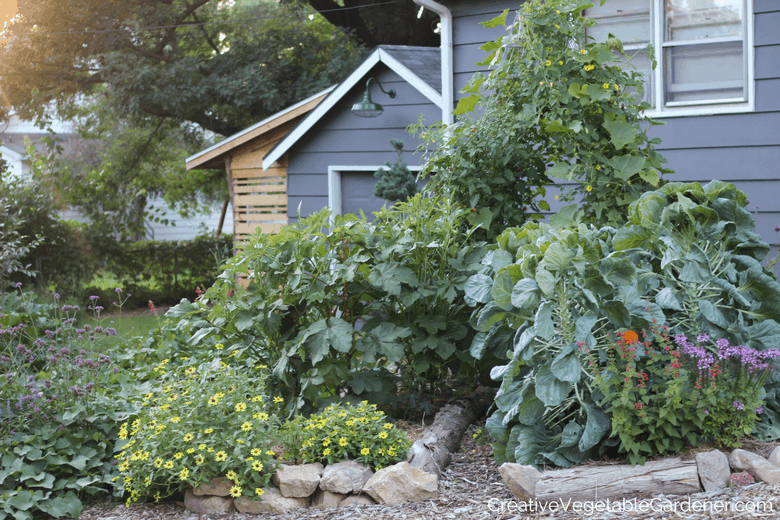
My front yard vegetable garden is a riot of color in the summer.
In the darkest months of the year when we can’t be out in our own vegetable gardens, the next best thing is looking at pictures of vegetable gardens.
One of the gifts of the off-season is the space and time to dream, imagine, and make plans for all the ways we’d like to create more beautiful and colorful gardens next season.
Checking out inspiring books from our local library, taking an afternoon to browse the gardening section of a bookstore, or just spending time on the internet reading gardening blogs and looking at gorgeous photos are all great ways to get the creative juices flowing.
Planning, seed ordering and starting, and late winter and early spring garden prep are all practical and important ways to prepare for the upcoming season.
But, daydreaming and visioning are also critical “tasks” we should make sure to carve out time for during wintertime.
I spent an evening by the fire recently with my laptop searching for stunning pictures of vegetable gardens. I’d love to share some of my favorites with you and what ideas and plans they sparked for me.
A common thing that happens in our gardens is that we end up planting too much of some vegetables and then come harvest time we have more than we can possibly eat.
Beets are definitely one of these vegetables!
No matter how much you love beets (there’s a phrase I would never have written 20 years ago…) if you’ve grown a bumper crop, you might find yourself wondering, “What am I going to do with all of these?”
You might start thinking that you have to spend an afternoon in your kitchen canning a big batch of pickled beets. Or you may wonder which of your neighbors is secretly a beet lover and would be delighted to receive a surprise bag of beets on their front steps this weekend.
But, what if I told you there’s really no such thing as too many beets? Would you believe me?
This is only true if you know how to store beets easily and quickly.
And if it’s fall, I have good news. It’s simple to store beets for use in savory recipes all winter long. I’ve harvested beets from my garden in late October in zone 5, stored them using the method I describe below, and was still using them fresh the next April and May.
That’s over 6 months of storage!
Let me share my secrets with you, so you’ll never have to say, “I grew too many beets.” again.
If you live in a northern climate like mine, you probably feel color starved by the time spring rolls around each year. After months of looking out your window and seeing endless variations gray, white, and brown, you might start to think you’ve forgotten what other colors look like.
That’s why the first spring bulbs can be such a joyous shock to the system. The day I walk out my front door and yelp in delight over the cheerful blooms of the early crocus is one of my favorite times of the whole year.
The return of color to the landscape is the beginning of the return of our favorite hobby. But, sometimes spring arrives a little bit more slowly than we might like.
That’s why, over the years, I’ve found that my spring planted bulbs offer just the dose of early season interest and excitement to distract me from my impatience about spring’s slow advance.
And one important lesson I’ve learned – there’s no such thing as too many spring bulbs.
Let’s commiserate about all of the frustrations of summer gardening for a minute.
sneaky insects like cabbageworms, squash bugs, and slugs attack our vegetable plants, sometimes killing them completely
sneaky insects attack us! Hello, mosquitoes.
summer is high time for plant diseases like downy mildew on basil and blight on tomatoes
drought, heavy rainfall, or summer hail storms conspire to stress out our plants
hot weather and humidity sometimes makes working in the garden too big of a chore to tackle
weeds loom so tall that the neighbor kid mysteriously disappeared in them a few days ago
There’s no doubt about it – gardening in summer is difficult.
And don’t even think for even one minute that you’re the only gardener struggling with these frustrating issues during the height of the gardening season.
In fact, let me show you two depressing photos that pretty much sum up my summer garden so far.
(Don’t be fooled by all of the pretty photos of my garden on this blog – things go wrong in my garden all of the time!)
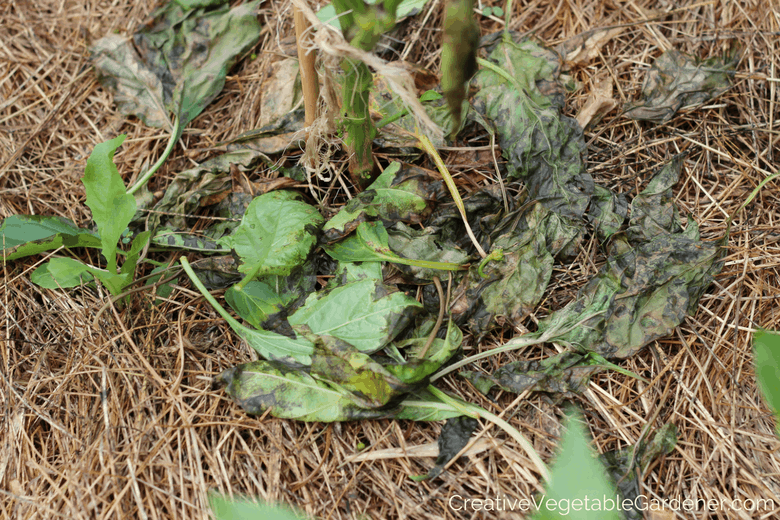
This first one is what 30 of my 45 peppers plants looked like a week ago. They were shedding leaves like crazy and hardly had any fruit on them. After frantically doing some research online I discovered they most likely had bacterial speck, and the advice offered was to get rid of them immediately.
A few nights later I pleaded with my husband to come out to the garden with me and assist in ripping out all of the pepper plants in two garden beds and throwing them into our trash bin so I didn’t have to face this heartbreak alone.
Ouch, it hurts just writing that.
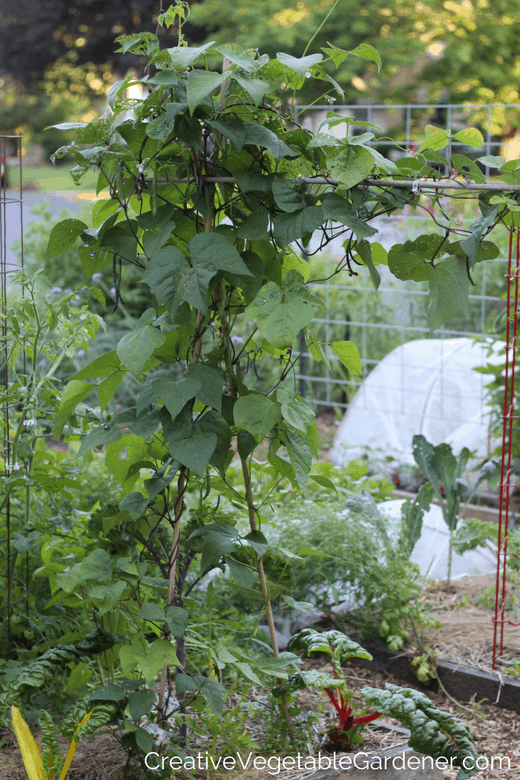
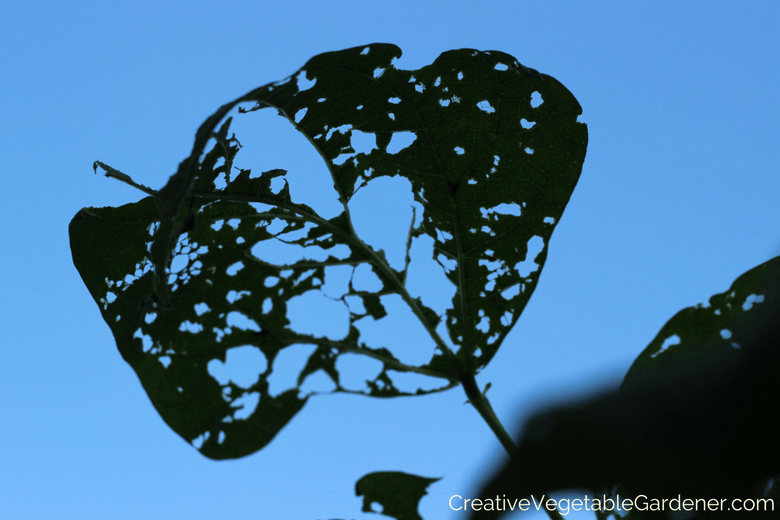
These second two photos are of Japanese beetles devouring the pretty pole bean trellis I built this spring. Everywhere I look there are copulating beetles covering the vines. It’s like a crazy garden sex party.
But, don’t worry, just below the trellis is a bucket full of water where I cast them to their deaths. (Sorry to be so frank, but it’s true.)
Summer is the season we anxiously wait for as gardeners, but it’s often filled with disappointment and heartache. See pepper story above as evidence.
So, it’s no wonder that at the end of the summer, we feel exhausted. We start to feel like it’s time to pack the gardening gloves away and call it a season.
But, if you quit now, you’re going to miss out on one of the best, and underutilized, seasons in the garden – the fall season. It just might be my favorite time in the garden.
Why? Well, it’s way easier to grow a fall garden than a summer one.
Imagine putting in much less effort for big harvests that carry you through to Thanksgiving, and maybe even until Christmas.
If you’ve never experienced the joys gardening in this season, here are the reasons why you should consider growing a fall garden this year.
When it’s time to go grocery shopping for a camping trip, my husband, Mark, is the one in charge because, as he puts it, “I’m the best at buying lots of snacks!”And it’s true, I’m not known for my junk food shopping abilities. I’m more of a healthy camping meals kind of gal.
And while I do like to indulge in things like potato chips (Black Pepper Kettle Chips – yum!!) and beer while sitting around the campfire, it’s also important to me to try to balance that out with some healthy camping meals.
Plus, camping season coincides perfectly with the gardening season, which means if you’re a gardener then you likely had to go out to harvest a bunch of veggies before you left on your trip. Why not bring them with you and incorporate them into your fireside meals instead of leaving them home to languish in the fridge?
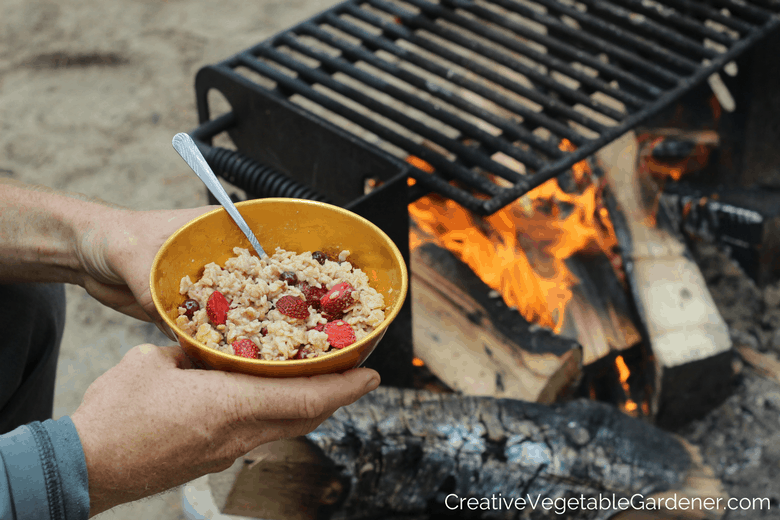
I thought I’d share a breakfast, lunch, and dinner from a recent camping trip that highlights garden fresh fruits and veggies to keep you healthy while traveling, and still leaves plenty of room for indulging in your favorite vacation junk food between meals!
Are you a vegetable gardener, a perennial gardener, or both? Did pursuing one lead to an interest in the other?
I often teach and travel with the Creative Vegetable Gardener, and it’s interesting to meet gardeners from all over the country and discover whether they grow just flowers, just vegetables, or flowers and vegetables. Each type of gardening has its own tricks and techniques, and what you learn in one doesn’t necessarily translate into the other.
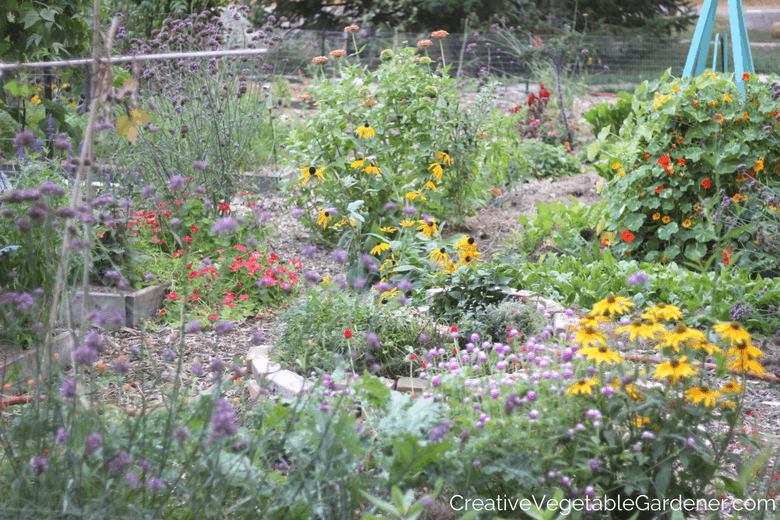
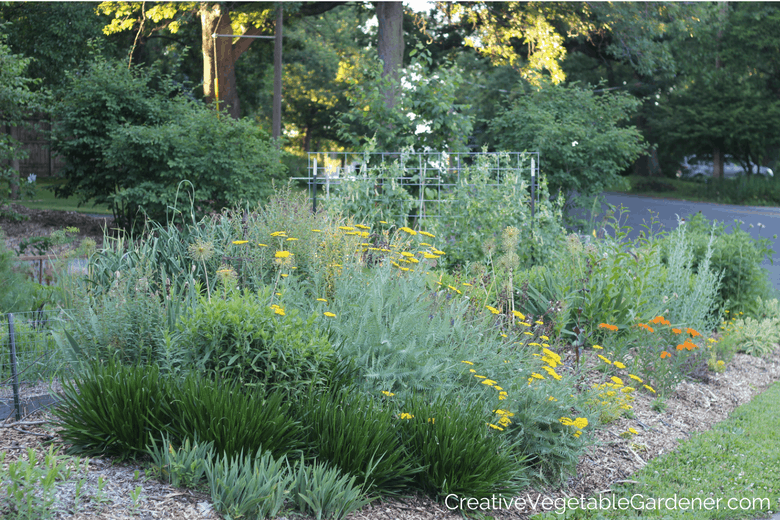
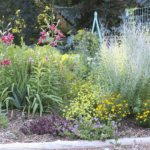
But, if you grow perennials and vegetables, like I do, it can be fun to try to bring those two gardens together as much as possible in your landscape. One way I’ve done this is to create a perennial garden located between my front yard vegetable garden and the street.
This has multiple benefits: my vegetable garden can borrow some of the color from the perennial border during times of the year when it’s not terribly interesting (early spring), the perennial flowers draw scores of beneficial insects and pollinators into the front yard, which benefits my vegetables, and the perennial border puts a pretty face on the front of my property and serves as a buffer between my food and the street.
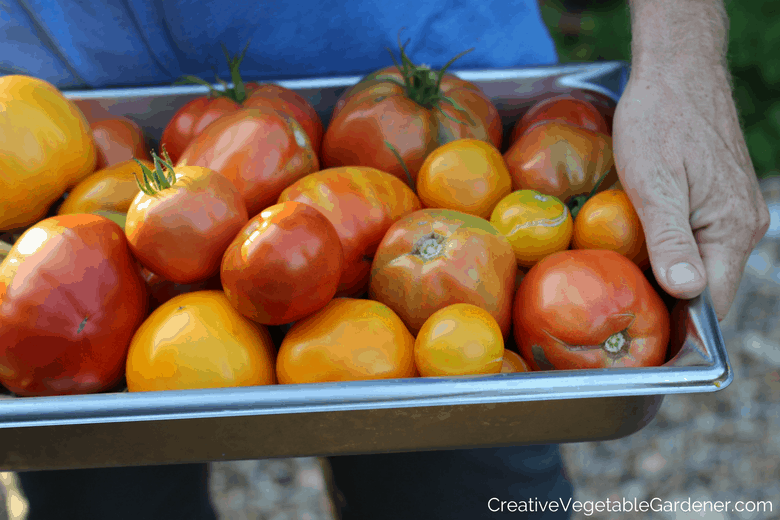
Tomatoes might be the one vegetable (or fruit!) that most of us gardeners grow each season. Juice from a ripe tomato dripping down our chins is a celebration of summer!
This love for tomatoes can make it especially frustrating when they’re struck by disease. Unfortunately, in many locations there’s a long list of diseases that attack, and often kill, our beloved plants.
Most of the diseases are fungal in nature and are often hard for the untrained eye to tell apart. The good news is there are some things you can do in your garden to decrease the negative impact these diseases have on your summer harvests.
I like to call them “best practices” because this list should become part of your regular gardening routine every year. If you love your tomatoes, incorporate as many of these as possible to protect and support your plants in fighting off disease.
The gift of harvesting a juicy, ripe tomato straight from the garden is one of the reasons why many people have a garden in the first place. For many gardeners, the homegrown tomato is the perfect illustration of how the taste of the food we grow ourselves far surpasses anything we could buy at the grocery store.
The tomato is the symbol of what a summer garden harvest means to many of us.
And tomatoes are known for being one of the easiest vegetables to grow – plop them into the ground, slap a DIY trellis on them, and then come back a few months later and start harvesting bowls full of glorious ripe fruit.
In most climates, tomato plants will produce lots of tasty fruit without a lot of assistance from the gardener. While it’s true that there’s nothing you have to do to your tomato plants except water them and keep them off the ground, what if I told you there was something more you could do to increase your harvest, reduce diseases, and overall have a much better tomato harvest?
This magic task is a simple one – it’s called pruning.
I first learned about pruning my tomatoes when I worked on a CSA farm. The farm planted thousands of tomatoes, and for a few days each summer the whole staff would line up and down the rows busily pruning the tomato plants.
Seeing the results of removing the tomato plant suckers at the farm convinced me to try it on my own plants at home. And, since that fateful day, I’ve pruned my tomatoes every year.
If you’re not a practicing pruner yourself, I’m hoping to convince you to put this task on your garden to-do list this season.
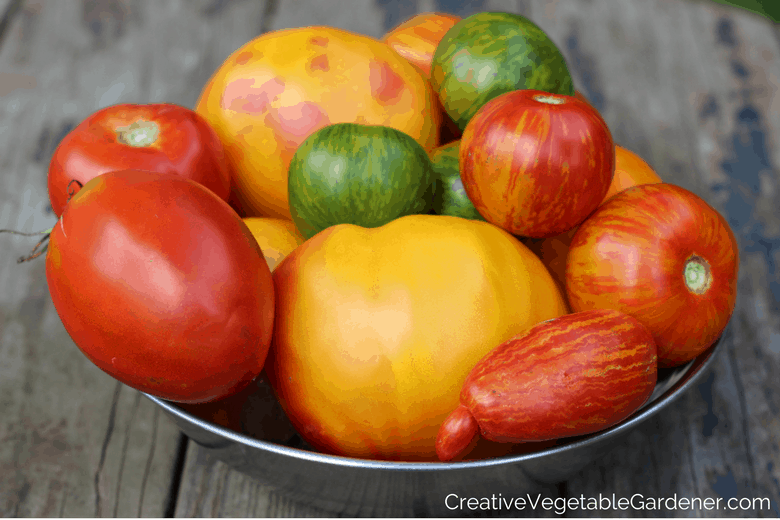
Whether you grow your own tomato plants at home or shop for seedlings at your local farmers’ markets, you’ve probably felt overwhelmed trying to decide which are the best tomato varieties to grow in your garden.
Don’t feel bad about that!
There are hundreds of varieties of tomatoes in cultivation and reading the plant descriptions in the seed catalogues doesn’t help much – they all sound like the best variety ever!
And every gardener has their own top five list of best tomato varieties. Ask ten gardeners for their favorite picks and you won’t hear the same tomato twice.
So, in an effort to help you make the best decision for you, I’m going to have you take a step back and look at the bigger picture.
Instead of trying to make your decisions on the fly when you’re standing in front of a table of plants in the hot sun, here are some things to think about before you buy.