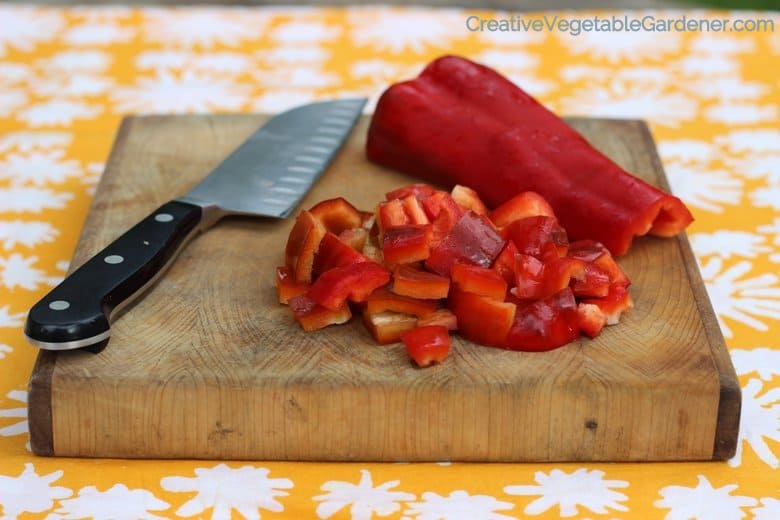
Learning how to freeze peppers from your garden or the farmers market is easy!
One of the gardeners in our community who purchased my book, Super Easy Food Preserving chose to freeze peppers as her first food preserving task of the season. She sent me this email:
This is the best money I’ve spent all month!! Yellow and red peppers at the farmers market are $.50 each right now. Organic red peppers in January will cost $5 each.
There’s no doubt about it – a red pepper at the peak of the season tastes nothing like its waxy, dull tasting, unnatural looking cousin sitting on the shelf in January. And they’re way easier on the wallet during the booming summer harvest months.
It’s such a pleasure to cook in summer with food that’s fresh from the garden or market. Meals come together easily because all you need to do is highlight and augment the amazing taste of the featured vegetables.
With a little extra work in summer and fall that kind of cooking is within your reach all year round.
You can appreciate the abundance of the season while it’s here, and also save some for later. Preserved food makes cooking in the winter so much more fun…and tasty!
My sister, a beginning gardener, called me recently and was excited that she froze some of her red peppers. She looked at the book’s directions for preserving and there were four steps. “Only four steps,” she said, “I can handle that!”
You can, too! Let’s freeze peppers together this year.
At the peak of the harvest season, most of us have fridges jam-packed with our abundant harvests. It’s exciting because it’s what we’ve been waiting for all year.
But, it can also be stressful.
Every time you open up the fridge door there’s a lot of produce calling out to be put away for the winter or it will end up in the compost bin.
And, as is often the case where I live in Madison, WI, the height of the food preserving season coincides with some of the hottest days of the summer. The last thing I want to do is stand in front of a boiling vat of water for 12 hours during a marathon canning session.
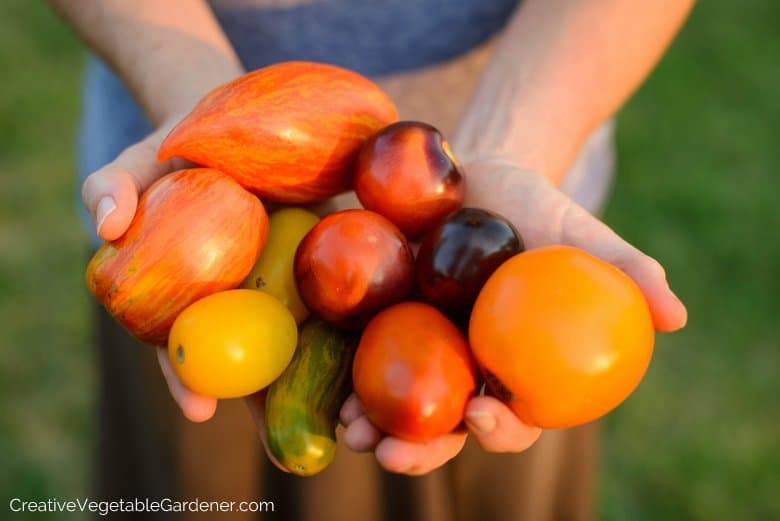
If you feel the same way, but you have a crate full of tomatoes you want to put away for yummy winter dishes, let me give you some good news.
Canning tomatoes isn’t the only way to preserve them. Yahoo!!!
Here’s how to preserve tomatoes this summer without the blood, sweat, and tears that often accompany a long, hot day of canning.
Mark and I love to travel and we love gardening. We often combine these two passions into one awesomely fun package whenever we travel (with a little beer and bikes mixed in, too). When we set out on a trip somewhere the first thing we do is look up garden related sites and activities: garden stores, botanical gardens, arboretums, farmers markets, art exhibits and neighborhood walks. We’re all over anything with the word “garden” in it! I often wish there was a garden themed travel site that spoke to my tastes. I have a few sites I check in with to help craft our visit, but there’s nothing comprehensive that I’ve found. So, in an effort to make garden travel easier for the rest of you, here’s the first in a new series.
This past weekend we took our yearly trip to Chicago. We’ve visited about once a year for the last 10 years and have managed to find some favorite garden spots. Here are my suggestions for a garden-themed trip to Chicago.
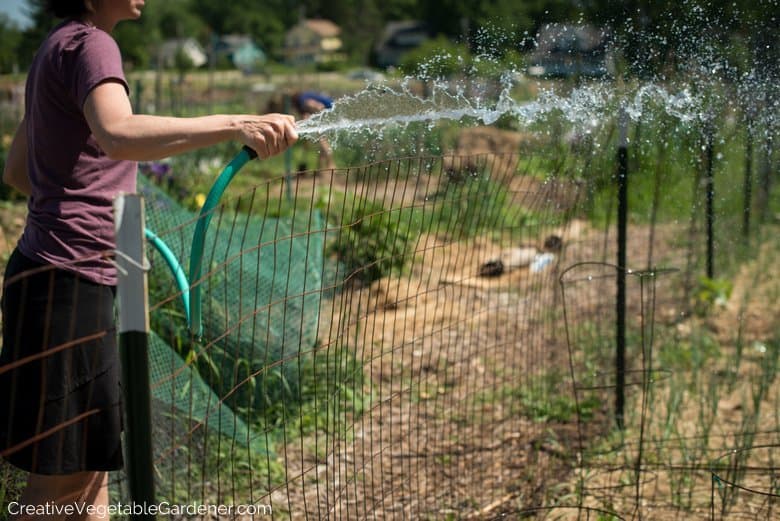
Along with soil and sunlight, water is an extremely vital part of your garden’s success. But, watering your vegetable garden can be tricky.
Water too much and some plants, like tomatoes and squash, will be more prone to disease and even start to look very unhappy.
Water too little and vegetables like onions won’t grow to their full size and you’ll end up with a puny harvest.
Watering incorrectly can cause a lot of unnecessary problems in your vegetable garden throughout the season.
And it can be confusing! How do you know when and how to water your plants?
Don’t worry! We’ll sort this all out for you. In this post we’ll go over the best tips and techniques for watering your vegetable garden so you can set your plants up for a successful and abundant season.
And don’t forget to check out the featured video on this page which was filmed in my front yard garden and teaches you the best ways to water your own garden.
If you’ve tried growing blueberries in your garden you know they’re a little persnickety. They need acidic soil to really produce (my pH is 7.7 currently!) and birds will come from miles around to snack on this garden grown delicacy. It’ll be a Mother Nature miracle if there’s any left over for your morning granola.
The blueberry plants I planted a few years ago just sat there in the garden bed and sulked. Eventually I got frustrated and ripped them out. I have limited garden space and not much patience for things that don’t perform.
But, I eat a lot of smoothies and blueberries are one of my favorite ingredients. I was buying big bags of blueberries from my local food co-op, but it was bothering me that all of the blueberries I was eating were from Maine when I live in Wisconsin.
Luckily, when I had my food preserving epiphany a few years ago I realized I don’t have to grow everything I preserve. (Duh!) So, I set a goal of attempting to preserve all of the blueberries I would need for a year’s worth of smoothies. I searched for a local u-pick farm, calculated how many pounds of blueberries I might need (35!), and set that as my target for picking.
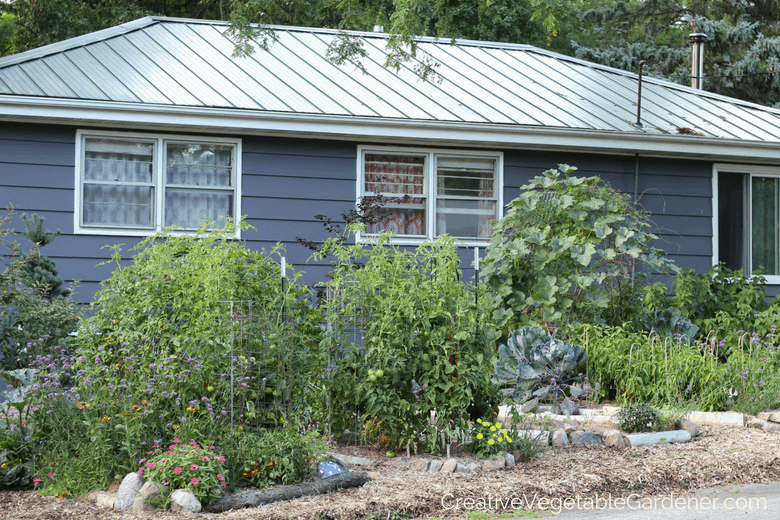
My garden in the middle of August – the height of the season!
During the height of the vegetable garden season your plants should be big and lush, the fruit and veggies abundant, and the flowers bursting with color.
This means the whole ecosystem of your garden is functioning at optimum health to provide you with the large harvests that make growing your own food so worth it!
But what if your garden, or individual plants, looks terrible? What should you do?
It’s time to look into what the cause might be. Soil problems? Not enough sun? Wrong variety for your climate?
In this article we’ll dig into some ways you can diagnose what’s happening when your garden is performing up to your expectations.
But, first, you should know you’re not alone. This has happened to me. At two different houses. Even after ordering new soil and installing new raised beds.
Here’s the quick version of the story:
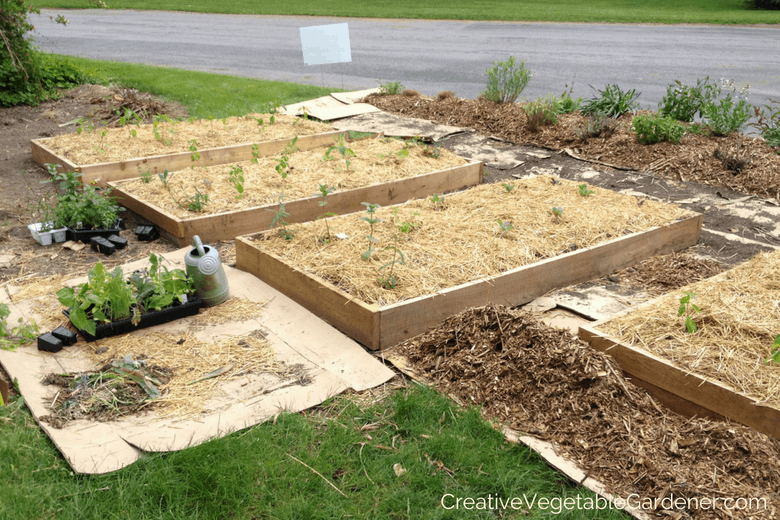
When we purchased our current house a few years ago at the beginning of June we immediately installed four raised beds as a quick first phase of our new front yard garden.
Installation of phase 1!
I was nursing a bunch of seedlings along all spring, so the plants were pretty yellow when I planted them in the garden. Usually, when I plant a sad looking seedling, within a few weeks it bounces back with new growth that’s dark green and healthy.
Four weeks later, the plants had grown very little and still looked stressed out. I immediately went through the most common factors that affect plant growth and tried to diagnose what was happening.
On the summer solstice I asked for the top three things that challenge you in the summer garden and you answered! Here are the top 8 issues that keep many of you up at night thinking about your garden:
Weeds: After reading all of the comments it’s possible that weeds define the summer garden! Many of you are thinking about invasive weeds taking over your garden, weeds coming up in your mulch, how to tell which plants are weeds, and knowing which weeds are most important to pull.
Pest control: Large pests such as rabbits and chipmunks and tiny ones like flea beetle are attacking many of your gardens. And the mosquitoes are driving a lot of you crazy!
Seeds: Seed sowing continues in the summer garden. From starting seeds at the right time of year so you end up with large seedlings for summer planting to what to do when seeds don’t germinate –those tiny little bundles of energy can create confusion in the garden.
Harvest: Many readers aren’t sure about the right time to harvest their vegetables. And when it is time to harvest you have trouble keeping up and want to make sure you aren’t wasting the vegetables you’ve grown.
Plants: When you are out in your garden surveying the plants you are thinking, “Are they big and healthy enough?” “Did I give them enough room to grow?” “Why did I buy that last batch of plants from the nursery? I don’t have anywhere to put them.”
Watering: Our community of readers is dealing with the full spectrum of water issues from flooding to drought. Some of you are trying to set up systems for watering and others are wondering how much to water.
Garden Planning: How to rotate crops, planting for maximum yields and figuring out how succession planting works are all important planning topics on the minds of blogs readers.
Time: For those who work full time, have families and other commitments, or live far away from their gardens, carving out time to work in the garden can be a challenge. Waiting and having patience for things to grow is also a lesson the garden is teaching all of us.
In our fast paced, info-centric world, it can be a relief to spend time with your hands in the soil creating something concrete. The emotional and spiritual benefits of gardening bring an additional, often unexpected, layer of pleasure and joy into life. Slowing down, connecting to and understanding the rhythms of the natural world and being in the present moment all nourish our souls in ways that are similar to how vegetables feed our bodies.
Humans have been tending fields and gathering harvests for thousands of years. Here in Wisconsin, most parts of the state still have a strong agri-culture. For many of us, neighbors and friends are growing food for our CSAs and markets. Gardening brings us more in touch with the people who grow our food. We may stop and chat with our local farmer about her beautiful red peppers or ask him for a local broccoli variety recommendation.
Designing a Garden
When the Schells hired me to help them design their front yard garden, Lisa already had some ideas for layout and features. She had spent time searching in books and on the Internet for images that inspired her. Without knowing it, she was already in the first stage of the design process—gathering inspiration.
When thinking about starting a new garden or revamping an old one, it’s wise to spend time envisioning what you want your garden to look like. What styles of gardens are you attracted to? Do you prefer cottage gardens with overflowing, colorful borders or the more neatly lined up raised bed gardens? Are there certain colors and textures that catch your eye while perusing your favorite garden magazine?
Browsing garden photos on the Internet is a great way to gather design information. Pinterest and Evernote are great places to collect the images that represent your garden vision.
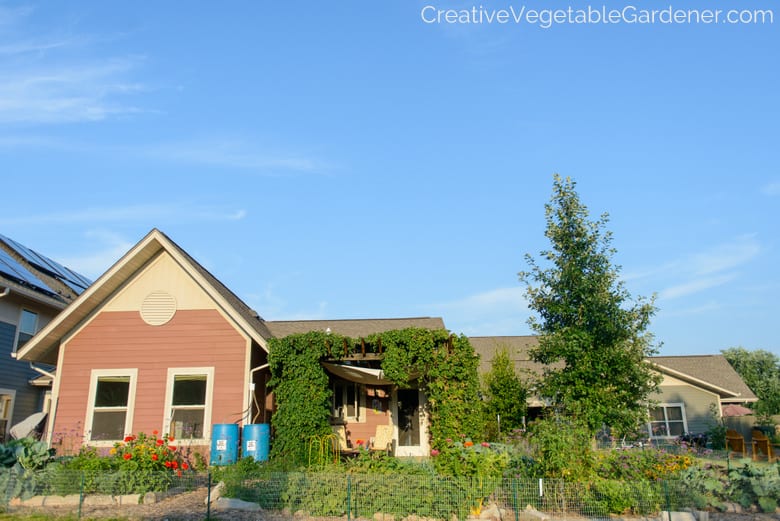
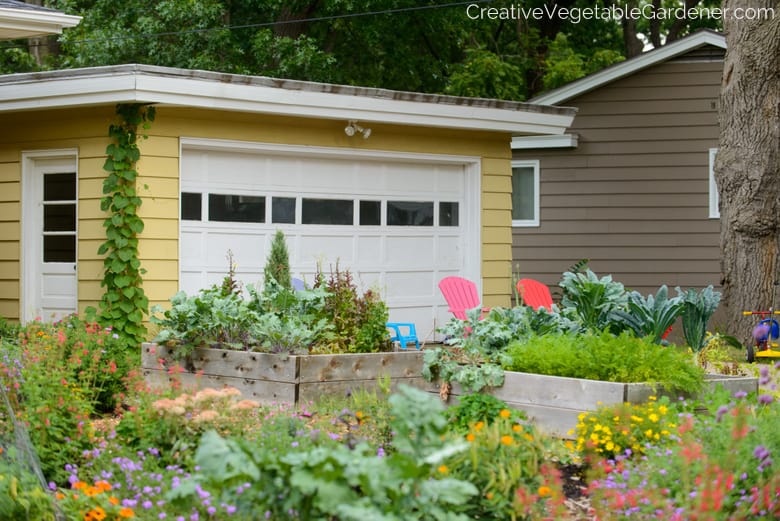
Because the Schells’ property receives full southern sun, they chose to locate their garden in their front yard. Although the backyard is the traditional spot for a vegetable garden, more and more homeowners are electing to install front yard gardens, not only for the logistics of sunshine but as a wonderful opportunity to get to know neighbors. A vast expanse of front lawn doesn’t encourage relaxing and socializing, but a vegetable garden needs regular care. That means more time spent in the front yard watering, weeding and harvesting, and plenty of opportunities to say hello to and answer questions from curious neighbors.
Lisa had already been paying attention to what her family ate regularly. When she was ready to expand her garden, she knew exactly what she wanted to plant. This is a great exercise: before running out to buy seeds and seedlings, take some time to think about what you purchase at the grocery store each week. What’s difficult to find or expensive to buy organically? Can you grow some of those vegetables at home? Even though it sounds like common sense, it’s important to plant what your family eats so you are making the most of the time and energy spent on the garden.
While there is always work associated with gardening, it is possible to create a beautiful space that produces a lot of food without unnecessary work. Laying out the garden in a permanent design of beds and paths is a key to longer-term low maintenance. Permanent beds can mean building traditional lumber raised beds, or it can mean simply outlining the beds with logs and rocks or other materials you have on hand. Many gardeners prefer a simple mounded raised bed without reinforced sides. The material and style doesn’t matter. The important thing is to have a defined garden area, allowing you to focus energy and resources on the part of the garden that matters most—the planted beds. You’ll save the time usually spent tilling and redesigning the garden layout each spring, and keep permanent paths thickly mulched so you don’t waste time weeding those areas.
Lisa’s garden already had several lumber raised beds, so we added a network of mounded beds that served as additional production areas in the center of the garden. This gave her a clear garden design that would carry over from year to year. Lisa’s garden is fairly large for a city dweller, but she built up gardening experience with her existing raised beds before expanding, so her decision to significantly increase the family’s garden size was a conscious one. In general, it’s best to start small and be successful rather than create a garden that’s too big and becomes overwhelming. Setting yourself up to be successful so that gardening is an enjoyable experience means you’ll be more likely to continue gardening for many years to come.
Many gardeners create a two- to five-year plan for their landscape. The Schells originally wanted to build a stone or brick path leading from the yard entrance to the front door. After getting several bids from local contractors, they decided to push the project back a year. They also pushed back plans to build a fence in favor of spending the first season acclimating to their expanded garden. Other items on their list for the future included planting perennial vegetables and fruits like asparagus and raspberries. It’s important to remember: don’t take on too much the first year. You can slowly add to the garden as you gain more experience growing food.
Because the Schells’ garden is in a highly visible part of their property, it was important to create some additional interest and color with perennial flowers, trees and shrubs. The front of their yard now features a perennial flowerbed running the width of the property along the sidewalk and along the path to the front door. We planted a selection of colorful and low maintenance flowers with various bloom times to accent the vegetable plants. The family could also plant herbs and annual flowers in these borders to complement the perennials.
The Results
As Lisa Schell’s family is discovering, a well-designed vegetable garden feeds the body and soul. One afternoon that first season, the kids were tickled to discover six different kinds of butterflies fluttering around the garden. The kids could also regularly be seen snacking on sun warmed cherry tomatoes and fresh-picked green beans. The neighbors popped by to see what the family had growing and were sometimes sent home with a taste of the harvest. The family’s table was filled with food they were proud to have grown themselves.
Whether your garden is in the front yard or back, set aside time this season to create a space that’s a highlight of your home landscape. With a little planning and a bit of extra effort, your garden can inspire deep joy and supply your family’s dinner table with beautiful vegetables all season long.
Growing food in a community garden plot is a very unique style of gardening with great benefits and some tough challenges that home gardeners don’t experience.
The benefits: meeting kind and generous people from all over the world who share a love of gardening and learning from each of them by watching what they grow and how they set up their gardens.
The challenges: the far distance from your house which often limits how frequently you can visit your garden, and the difficulty of managing your garden from afar.
If you’re not careful, these challenges can make community garden plots feel more like a burden than a joy.
But, don’t worry! A lot of the hardship can be avoided if you pick the right vegetables for growing in a community garden.
I’ve grown food at several different community gardens here in Madison, WI (zone 5a) over a ten year period, and had a home garden at the same time during many of those years.
I learned a lot about what vegetables work best in a community garden setting, and which ones to leave off the list each season.
Here are some special considerations when deciding which vegetables to grow in your community garden.
“When you try to control everything, you enjoy nothing. Sometimes you just need to relax, breathe, let go and live in the moment.” ~Unknown
I am a recovering doing addict. My whole life I have been committed to getting things done. I do, do, do until I can’t do no more.
I have a very clear memory of myself in college, sitting at an evening lecture. I am not paying attention at all. I am writing a huge, long to-do list on the back of a blue folder. Things keep popping into my mind, things that must get done right away. I must capture them on this folder so they don’t escape me. All that matters is the list in that moment. I don’t listen to a word that is being said.
Scraps of memories like this one, some from earlier in my life, remind me that I have always been like this. This way of moving (or running?) through my life is not new. It is woven into the fabric of my being. And it has worked well for me in a lot of ways.
I have lived in different cities, held many jobs, traveled all over the world, and started my own business. But there’s a darker flip side to it too, one that drives me into a frenzy of action more often than not. I am growing weary of it. It’s exhausting—the doing and the shoulds and the have tos.
I have been working with a fabulous life coach for the past two years. About a year ago I decided I wanted to change the way I am in the world. I wanted to transform myself from someone who was always stressed out and striven toward the next thing to a centered, joyful, fun, and more loving person.
I had recently started my own business and was feeling devastated that I wasn’t enjoying it. Just like every other job I’d had, I was working myself into a stressful mess each day. I was at the end of my rope and didn’t know what to do. When I spoke with my coach that week, I shared that I felt like I needed to be broken wide open for things to change.
During our session that day she suggested I put everything on hold and carve out a week to just be. No work, no doing, no nothing—just being. “But,” I proclaimed, “what am I supposed to do?” And she replied, “Well, Megan, you’ll just have to figure that out.”
I trusted her deeply and she had never led me astray. Plus, I was desperate. So I decided to go along on this adventure and deemed it the “Week of Being.” I wasn’t sure what to do that first day, so I went to the movies. I figured I’d ease myself into the whole doing nothing thing with some mindless entertainment.
I sat in silence a lot that week. I meditated, listened to music and Buddhist teachings, took walks, read, and laid on the floor of my living room doing absolutely nothing. Slowly, I felt the stress and anxiety fall away. It dawned on me that none of the things I told myself I had to do in life were real. They were all completely self-fabricated.
At the end of the Week of Being, I had a vision of myself in the middle of a labyrinth. I looked down and in my hand I was holding a smooth black stone. I had arrived at the center, and when I looked around I realized there was nothing there…nothing but me.
In my journal from that day I wrote, “I had it backwards these thirty-eight years. I thought the doing was what was most important. So the doing often led me down a path of anxiety and stress and even more doing. But it’s in the being where all of the answers lie. Taking care of myself, being in the present, accepting the now—that’s the answer. It’s the only thing I need to focus on. The rest of life will fall into place.”
It was a powerful week. It has shifted me onto a path of allowing more being into my life and letting go of some of the doing. It’s a simple concept really, but it’s not always easy.
It takes practice every day and sometimes I forget the lessons. But I am committed to this process, however long it may take. I know how to get things done, after all, even changing myself.
Lessons from the Week of Being
You can change yourself.
If you have a vision of who you’d like to become and are committed to the work, change is possible.
Do less. Be more.
Practice the art of doing nothing. Take some time each day to lie on the couch or stare out the window. When waiting for a friend at a coffee shop or riding the bus, just sit and do nothing. Don’t fill every moment with action.
Change is not a linear process.
Sometimes you may find yourself reverting back to your old habits and patterns. This is normal. Change doesn’t happen all at once. The good news is that every time you have a relapse, it feels worse and worse. This means you are changing! Get back on course and be easy on yourself.
When you take care of yourself, you are a better person.
Taking time to care for yourself will help you have more energy for others. When you are calm and centered you are a better partner, sister, friend, and parent.
Allow your actions to arise from a place of centered being.
Mindful action is far more powerful than flitting from thing to thing. When you live your life from a deep place of peace you are able to bring about profound change.
A few years ago my sister, a budding gardener, called me from Philadelphia, where she was thinking about growing onions, and asked me, “When you plant one onion, how many onions do you get?”
Wow! This one question completely re-framed things for me. I had never quite thought about each vegetable in this way.
And when I told her she would get one onion from planting one onion, she said, “Oh, then I’m not going to plant them. It won’t be worth it.”
Of course I had to laugh when she said this, because one of my favorite yearly rituals is growing onions!
But, our exchange was a wonderful reminder that what’s “worth it” to grow in our gardens is a purely personal decision.
Since you’re here reading this post, I’m going to assume you feel enthusiastic about growing onions this season.
I don’t know about you, but most of the recipes we cook at home start with onions and garlic in the pan with a little olive oil. We cook most nights of the week, so that means we use a lot of onions throughout the year.
That’s why they’re one of my favorite vegetables to grow.
I usually plant between 300-500 (mostly storage) onions so we can eat them all winter long. A fun challenge I set for myself is to never have to buy onions at the store.
Some years are more successful than others!
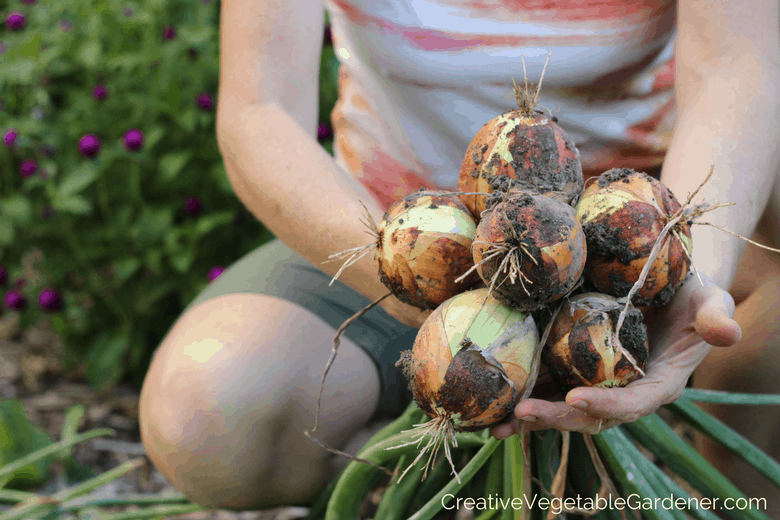
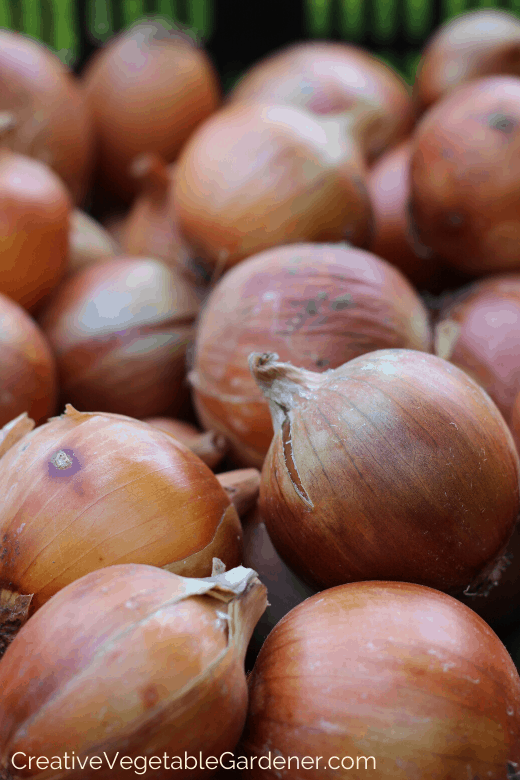
One thing I can say is that over the years, I’ve mastered the art of growing amazing onions. Every July, my onion harvest is pretty epic for a home garden, as you can see from the photos in this post.
Unfortunately, a lot of gardeners confide in me that they struggle to grow onions successfully. I understand, because there are some very specific techniques you need to practice in order to grow onions to brag about.
The goals of this post are to share the best practices for growing onions and get you excited about including them in your garden plan this spring. And you don’t have to grow 500 like me to join the onion enthusiast club!
I grew up in a very urban area of Philadelphia and didn’t know anyone who grew their own food. In fact, most people I knew didn’t have yards, just front stoops and back alleys. It wasn’t until my gardening internship in my mid-twenties that I realized I had never thought about how vegetables actually grew.
What the heck did a pepper plant look like? Shockingly, the thought had never crossed my mind.
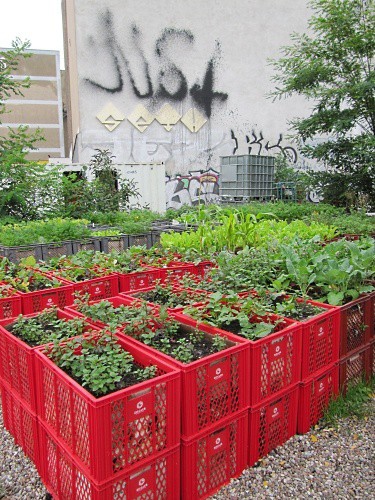
I recently went back for a visit to the east coast, where my siblings and parents still live very urban lives. Life has changed in the big city, and vegetable gardens are replacing tiny scraps of lawn. I spent some time with my brother in his small Washington, DC backyard, helping him figure out where to put two new garden beds.
My mom and sister live ten blocks from one another in downtown Philadelphia, and don’t have a speck of soil between their properties. My mom has a backyard patio where she sets up her “garden” each year with potted plants and flowers, garden art and a bubbling fountain.
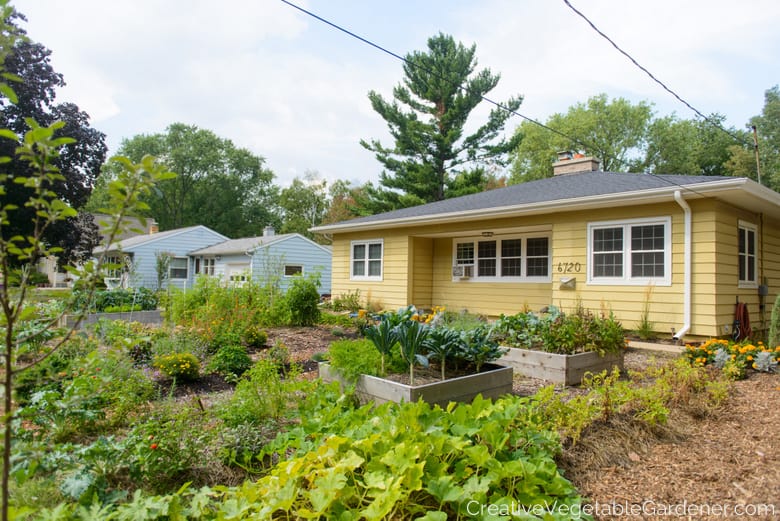
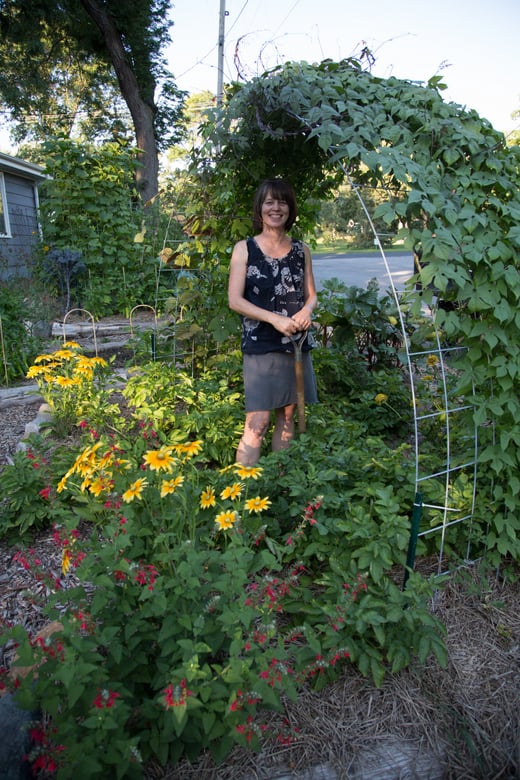
In my side yard vegetable garden.
My sister has experimented with growing food up on her second story black tar roof. This required climbing out a second floor office window and scaling a ladder up to water the 5 gallon buckets holding her vegetables.
Needless to say, after a season of that craziness I brought my solar pathfinder to her house so we could figure out if she had enough sun on her patio. Since then she has built raised planters to lift her herbs and vegetables a little bit higher to catch the sun peeking over the row houses that surround her.
I assure my sister that gardening will feel so easy when she gets her own backyard some day!
This year, my sister and mom have signed up for a community garden plot together. It’s fascinating to sit and listen to them figure out what to plant and how to start their garden.
I love it when my family calls to ask me questions about their gardens. Each time we talk they give me the gift of insight into the beginning gardener’s brain. The way they ask questions and the problems they’re struggling with helps me figure out how I can better serve and educate my clients. Many of whom are learning to garden for the first time.
In the eyes of my urban-dwelling family, I think I’ve become a bit of a country mouse living here in Madison for the past 13 years. But I secretly smile to myself knowing that, whether they admit it or not, my family is developing a little bit of Wisconsin in them, too.