It’s incredibly easy to grow your own garlic, especially if you live in a cold-weather climate. In fact, it’s so simple to grow that you can plant it and basically forget about it until you harvest it nine months later.
It’s the perfect vegetable for beginning gardeners because it’s so forgiving, and advanced gardeners will like the challenge of growing large quantities to store over the winter.
And if you’re a gardener who also loves to cook from scratch, you likely already start many dishes by throwing chopped garlic and onions into a pan with oil. It’s the foundation of many different types of cuisine!
Sure, you can buy garlic from the grocery store, but it’s never as tasty as homegrown garlic. And most of it is grown in California and China.
When other gardeners ask me about my favorite vegetable to grow in my garden, garlic is up there as one of the top five. I plant around 220 bulbs every fall and harvest them in July.
I store them in my basement for the whole winter, and I haven’t used store-bought garlic in many, many years.
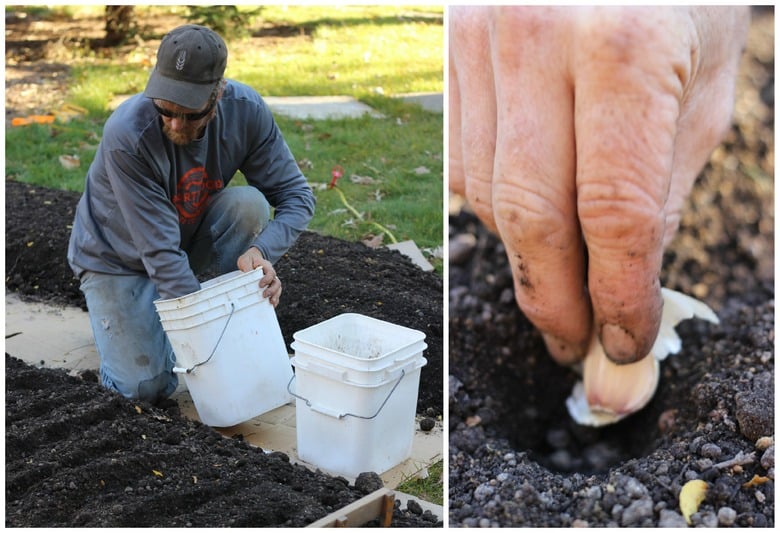
Unlike most other vegetables, garlic is planted in the fall, not the spring. If you live in a colder climate like mine in Wisconsin (zone 5), you should plant your garlic between mid-October and mid-November depending on the fall weather.
You have to plant before the ground freezes, but not so early that the bulbs begin to sprout.
As the climate warms I’ve been pushing my garlic planting back into November. I like to wait until I get a hard frost in my garden so I can clean out several garden beds of dead plant debris to make room for growing garlic.
To get you excited about garlic, I’m sharing 10 of the reasons why you’ll fall in love with growing it and permanently add it to your fall garden to-do list.
There are lots of glossy photos of amazing gardens out there, and sometimes they seem too good to be true. (That includes the ones on this website.)
Last year when I was a keynote speaker at a gardening conference, after my talk one of the participants approached me and said, “I loved your talk and your photos are beautiful. But, let’s be honest, what’s behind all of the colorful photos and funny anecdotes? What’s the real story?”
I thought this was an interesting question and it cuts to the heart of what can be a problem in the gardening world – putting forth the impression that our gardens are perfect.
As a garden educator, writer, and speaker, I can be guilty of this myself. It’s way more fun to share the most beautiful photos of my garden and talk about the success I’m having each season.
But, that’s not always the most helpful story to share. Because, even if you’re a very experienced gardener, you still make mistakes and have total failures each season.
And since The Creative Vegetable Gardener is run by a real person with an actual yard, I think it’s just as important for me to share what’s not going well in my garden so you know that I’m far from a perfect gardener.
There are plenty of times each season when I ask myself, “Why did I do that? I should know better.” and pledge to do better next season.
So, in an effort to be more transparent and show the not so glossy side of vegetable gardening, here are my disappointing garden mistakes of this season.
If you’ve ever felt annoyed, angry, sad, or even hysterical about the havoc wreaked on your garden by vegetable pests and diseases, know you’re not alone.
It’s the number one frustration I hear from organic gardeners all over the world during summer. The struggle is a real one!
And if we’ve had a particularly challenging season in our gardens, by the time fall arrives we breathe a sigh of relief and run to the garage to hang up our gardening gloves until next year.
But, wait, not so fast! If you’ve struggled with vegetable pests in your garden this past season (and really, who hasn’t?!), there’s something critical you must do before winter to put yourself way ahead of those little buggers for next year.
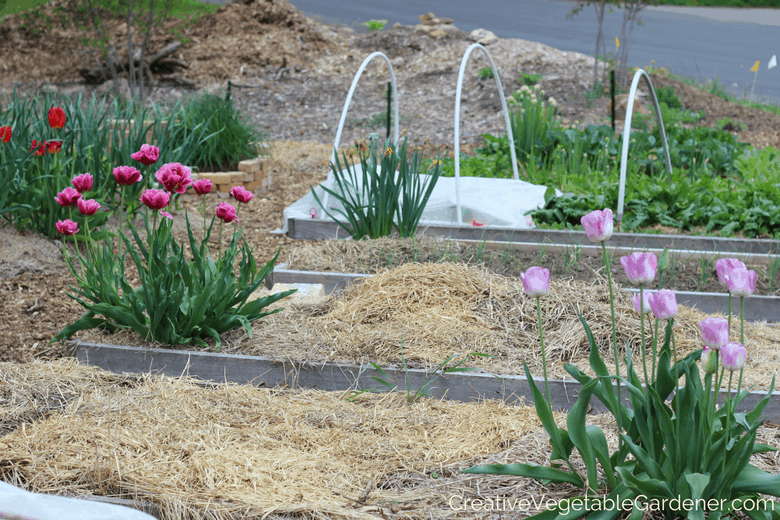
Spring starts slowly in many climates and the vegetable garden can seem pretty flat and boring at that time of year. In April and early May at my house, I mostly feel like I’m looking at a field of hay and woodchip mulch.
After a winter of filled with gray and white frozen landscapes, my eyes are aching for some color.
That’s why I’ve planted hundreds of spring bulbs around my house and throughout my perennial gardens. The absolute delight and joy they inspire in my thawing winter heart are unparalleled. And each spring I think to myself, “There’s really no such thing as too many bulbs.”
One year I was mentally complaining to myself how boring my vegetable garden looked, while the rest of my landscape was popping with color from the cheery spring bulbs, when all of a sudden I was struck by a genius idea – why not plant bulbs in my vegetable garden, too?!
Here in Madison you can definitely tell that we’ve turned the corner towards fall. We’ve had some chilly nights where we’ve had to close all of our windows, my asters are blooming, and I think I’m done eating cantaloupe and am almost ready to move on to winter squash.
While my September garden still looks very lush and colorful, it’s a different garden than it was during the last garden tour in July. Here’s what’s happening in the last full month of the frost free gardening season around these parts!
I climbed up on a ladder to get this photo of my front yard garden from above. Below is the view from the street. Mostly asters blooming in the perennial garden now. It definitely needs an overhaul next spring.
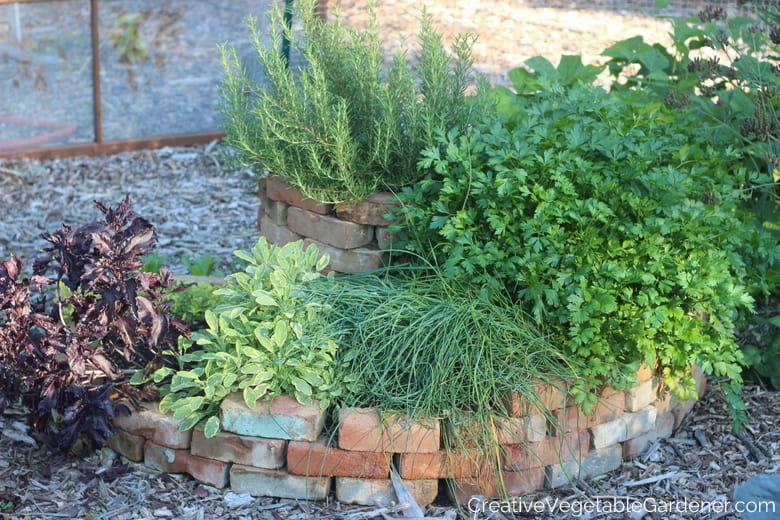
The herb spiral is overflowing with herbs. I’ve started to freeze lots of parsley for winter use.
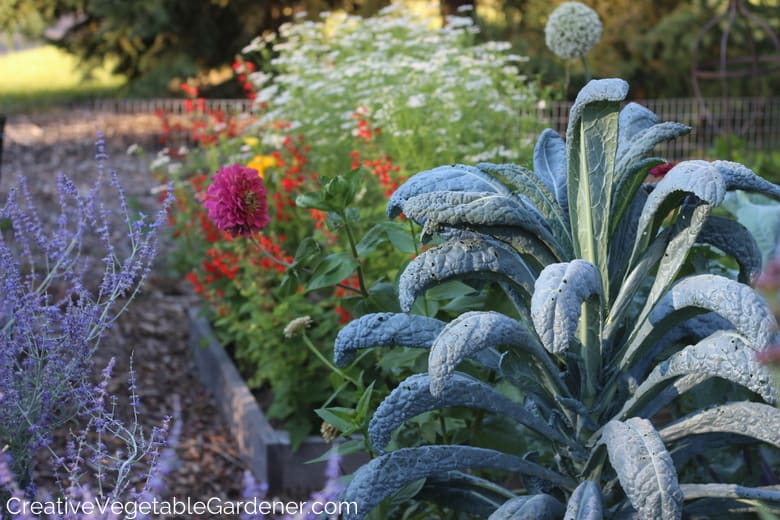
Lacinato kale in my front yard garden just waiting to be preserved for winter eating!
In this post I’ll show you how insanely easy it is to freeze kale for use in delicious recipes all winter long.
During the height of the summer harvest season, kale can get a little lonely in our gardens. I have to admit, I often brush by my kale plants in summer and rush towards the dramatic reds, purples, and yellows of my favorite summer vegetables like tomatoes, peppers, and eggplant.
But, when I take an objective look at kale, it wins a place at the top of my “most worth it to grow” vegetable list.
In my zone 5 garden, I plant my kale seedlings in mid-April and there they sit all season long calmly producing leaf after leaf after leaf for me to harvest and eat.
I’m often harvesting from those same kale plants through the heat of summer, into the cooler temperatures of fall, and right into the freezing days and nights of winter. It truly is an amazing vegetable!
It’s extremely long harvest season is why I devote a least one large garden bed to my kale plantings each season and usually grow somewhere around 12 plants of various varieties.
If you’re a kale addict like me, you probably end up with a large amounts of kale that’s ready for harvest, but no way to possibly eat that large of a quantity.
(Although the magical wonder of a massaged kale salad can go a long way towards helping you ingest a mountain of kale in one or two sittings.)
When you get to the point of having more kale than you can eat it’s time to freeze kale!
Kale leaves are at their most tender and yummy when they’re new, so there’s not a lot of benefit to letting them sit in the garden for weeks on end. It’s better to harvest and use them.
Luckily, kale is one of the easiest vegetables to preserve. There’s virtually no prep involved!
In the rest of this post I’ll walk you through the extremely easy process I use to freeze piles of kale every summer.
I’ve stopped buying kale from the grocery store in winter because I can simply run down to my basement chest freezer and pull out a bag of frozen kale whenever I want.
If you plan it right, this can be your reality, too!
On a summer evening, when I’m sitting at my dining room table chopping some broccoli to freeze for winter, my mind always starts to drift to the recipes I’ll use the broccoli in during the coming months. This is part of the richness and the fun of food preserving for me.
I think, “Well, I know I’ll definitely use it in my favorite Broccoli Basil Mac and Cheese recipe. Oh, and pizza. We always use it on pizza on Friday nights. And I love the Vegetable Upside Down Cake from The Enchanted Broccoli Forrest cookbook. Yum! I can’t wait to cook with this broccoli!”
During food preserving season, I always feel even more excited about freezing broccoli because I know exactly how I’m going to use it in the coming months. Each season of the year, the food I’ve put away enriches our meals, is shared with friends, and reminds me of the bounty of the gardening season.
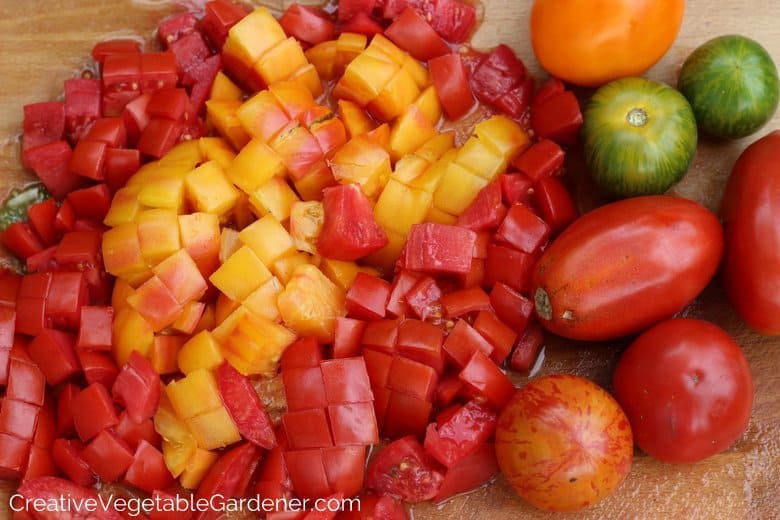
Summer tomatoes getting chopped and ready for freezing.
Winter
Because I grow lots of tomatoes in my garden, I always have a freezer full of chopped tomatoes. On a cold January night, I’ll defrost one of my containers of tomatoes and mix it together with onions and garlic stored in the basement, carrots I’m keeping in the fridge from my fall garden, red lentils, coconut milk, lemon, spices and soup stock to make one of my all-time favorite soups.
I’ll make a spinach salad, slice some of our favorite bread, and pull out a jar of pesto from last summer. Mmm, every time I eat that pesto I’m transported back to the sunny, summer garden. It’s good for the soul on a cold, dark night!
Hi, I’m Megan, and I hate canning. There, I said it. It’s out in the open now. I know canning is trendy and cool right now, but I avoid it at all costs. Why? Because this is how a day of canning usually goes for me.
My husband and I wake up early to get started because we know it’s going to be a long day. We clean and chop vegetables, wash jars and other equipment, and try to find the supplies hidden in our basement that we haven’t used since the last time we canned.
Invariably it’s a 90 degree summer day. We’re sweaty, we start to get cranky with each other, and the kitchen looks like someone blew up a tomato field. The stove is pumping out plenty more heat and humidity and we’re getting burned by vats of boiling liquid all afternoon.
I always think of July in the vegetable garden as the month where the harvest really starts to racket up! I’m starting to have a hard time keeping up with the vegetables coming in from the garden. I cook a lot during the week, but the fridge is getting more and more crowded with every passing day. What a wonderful “problem” to have!
I’d thought I’d take you on a tour of my garden as it is right now – a snapshot of the height of summer.
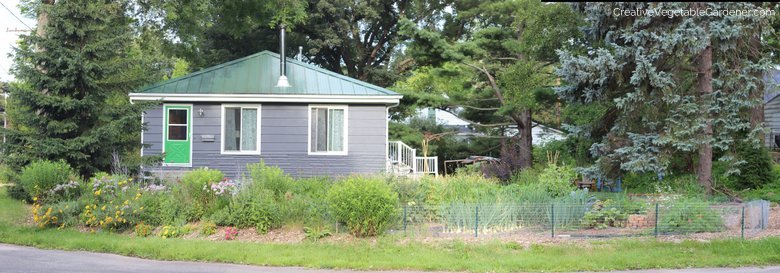
Notice anything different about my house in the photo above? I, with helpers (thanks Mom, Dad and Jeff), am painting our house this summer. Do you remember the old color? A minty green that we guess is the original color from the 1960’s. I’m unsure about the new accent color on the door. I think I may need to go a shade darker/deeper. It’s a little too bright.
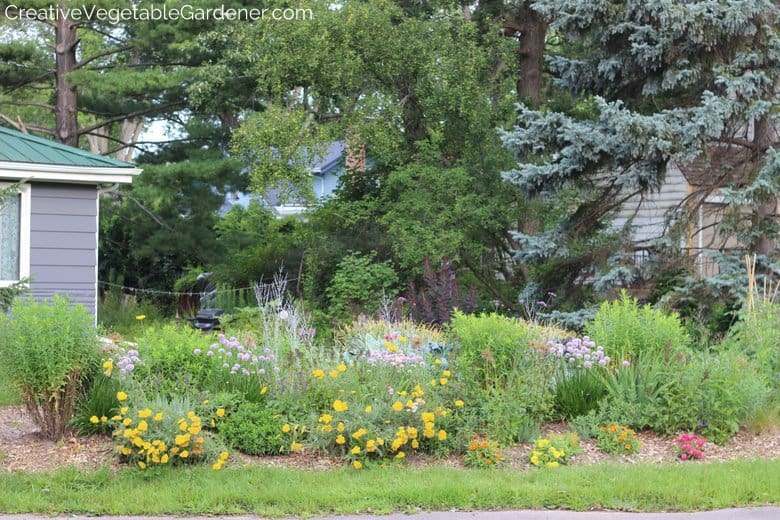
The flower garden border between the street and the front yard garden is really popping. It’s a bit crowded as well, so we’ll plan to move some things around in the fall to create more space. Below, the honey bees are all over this ornamental allium in the mornings.
Pruning indeterminate tomatoes should be at the top of your garden task list this season. Why, you ask? Take a moment and read through these questions…
Do your tomato plants grow huge and out of control each year?
Do they flop over, get taken down by diseases, or overwhelm parts of your garden?
Do you want bigger and more tomatoes earlier in the season?
Do you like to learn new tricks for your gardening toolbox?
If you answered yes to any of these questions then pruning is for you!
Let’s take a look at some of these issues and how they can be solved with pruning.
Tomato Diseases Plants being attacked by tomato diseases is one of the biggest struggles I hear from fellow gardeners during the summer.
There are a lot of different diseases that are difficult to tell apart, but one thing is true – most of them thrive in moist conditions.
Pruning your tomato plants thins out the foliage to introduce more air flow and sunlight, which can help with disease issues. I’ve compared my tomatoes that are well trellised and pruned with other tomatoes in my garden that are crowded and sprawling on the ground and the plants in the first category always have less disease.
In my garden I’ve found that pruning doesn’t cure the diseases, but it does help slow down the spread.
Overgrown Plants As the season progresses, tomato plants often turn into an impenetrable jungle which can swallow up small children, family pets, and trusty garden tools.
I haven’t seen my sister in three weeks, ever since I sent her out to pick some tomatoes for a dinner salad…
It’s much more pleasant to harvest tomatoes from a plant that’s neat and tidy, not one that’s sprawling and climbing all over the garden. Pruning out the suckers will keep the plant more manageable and will make harvesting much easier (and your sister safe).
Slow Ripening Fruit This overgrown mess of tomato plants can contain lots of fruit hidden within its tangle, but many of them will never see the sunlight and therefore won’t ripen in a timely manner.
If you’ve had trouble with tomatoes that take forever to ripen to a juicy red, they might not be getting enough sunlight. Pruning will help with that.
Not Enough Tomatoes! Is there such a thing as too many tomatoes?! Okay, yes. When I used to grow 40 plants that was a little too much. But, really, the more tomatoes I can harvest from one plant the better.
When you think about the incredible amount of growth indeterminate tomatoes put on in just one season it’s easy to see that they’re putting a lot of energy into growing more and more leaves and suckers.
They just don’t stop!
As the tomato harvesters, we’re happy for them to put on that green growth to a certain extent, but it does seem a bit excessive at some point.
We’d rather them turn their attention to actual tomato production instead of showing off how big and bushy they can get.
There is some thought that pruning your tomato plants will encourage them to produce more tomatoes overall by harnessing the energy they’ve been putting into growing more leaves and direct it into fruit production instead.
Saves Space The number one reason I prune my tomato plants is that it keeps the plants more compact, which allows me to plant them 18 inches apart (in double rows).
Some gardening articles suggest up to 3 feet of spacing between each plant. I don’t have enough garden space to be that generous.
Instead, I can fit a lot of plants in one garden bed because I keep the plants contained by pruning. This saves me space for planting vegetables I love even more than tomatoes (hard to believe, I know!).
If you’ve never had the pleasure of pruning indeterminate tomatoes, you should definitely try it this year.
And if you’ve thought about it, but the whole concept confuses you, I’m here to walk you through it step by step in the post below and with a bonus video I filmed in my garden.
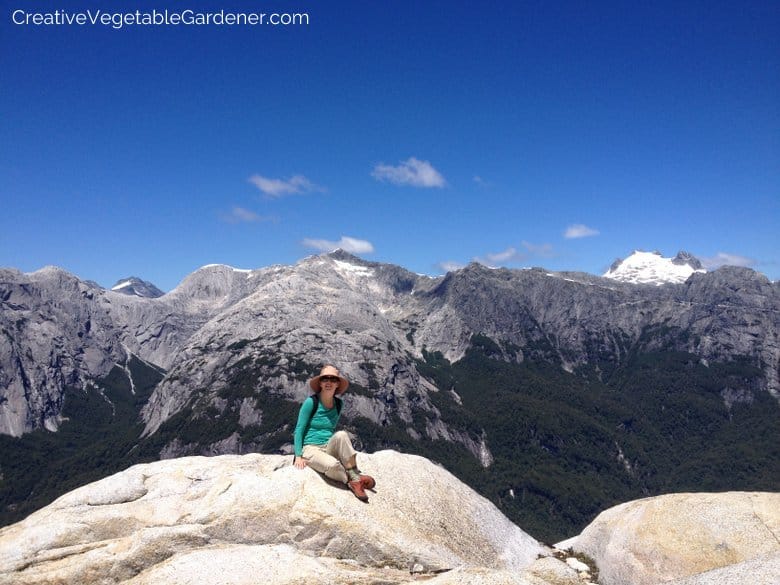
At the top of our favorite hike in the mountains of Chile, January 2014.
If you’ve been reading my blog for awhile you may know that my husband and I love to travel. For many of the last 12 years, we’ve spent 4-6 weeks of the Wisconsin winter in another country. (I reviewed our trips in this post.)
Traveling is a great way to meet interesting and adventurous people. I’ve always been fascinated by people who live unconventional lifestyles. In fact, many of them have influenced the ways in which I’ve constructed my own life over the years. Several years ago, I discovered the author and blogger Chris Guillebeau. He spearheads an online community, called the Art of Non-Conformity, devoted to “unconventional people doing remarkable things”.
The purpose of AONC is “to share the story of how to change the world by achieving personal goals while helping others at the same time.” When I first discovered his website he was in the midst of an incredible quest – to travel to every country in the world before his 35th birthday.
I’ve read all of his books, attended one of his conferences in Portland, and follow his blog. Through him, I’ve read about many amazing people, met fellow business owners, and learned many new things. But, the biggest gift I received from him was travel hacking.
I often wonder if I would love spring so deeply if we didn’t have such long winters here in Wisconsin. These are the days that remind me of why I live in Madison. The rainbow of spring flowers, the intense yellowish green of emerging leaves, the white puffy clouds against a vibrant blue sky – my heart swells almost to the breaking point with happiness at this time each year.
As spring starts to turn the corner towards summer (my second favorite season!), I thought I’d pause and take you on a tour through my garden as it is right now.
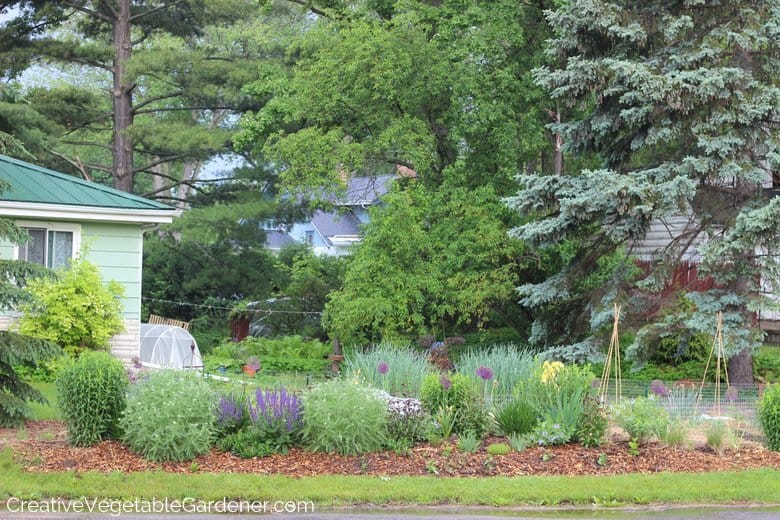
The photo at the top of the post is the view of my front yard from across the street. My husband and I created a berm with perennial flowers as a visual buffer between our garden and the street. One of my favorite bulbs, purple allium, is scattered throughout the bed.
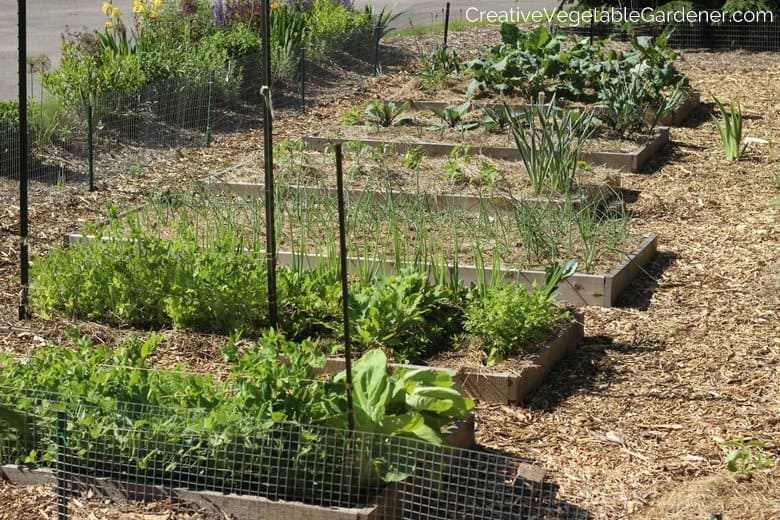
Now that it’s the first week in June most of my beds are filled with transplants and seeds. This shot shows the raised beds near the street. The two closest are the early spring crops of salad greens and peas. Farther back are onions, tomatoes, peppers, cabbage, leeks, broccoli and kale.