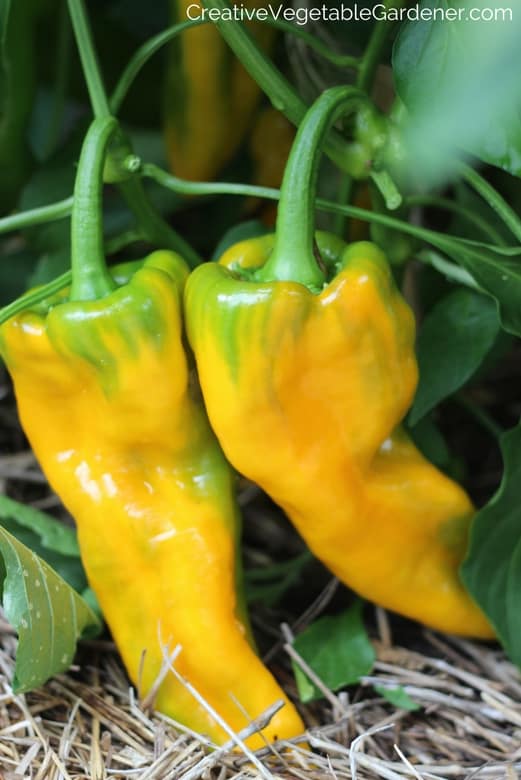
At the local Garden Expo one winter, while chatting with some fellow gardeners, they mentioned their terrible luck with peppers the previous year – their fruit didn’t ripen to red – which left them feeling extremely disappointed.
I immediately asked them what variety they grow.
They looked at each other and shrugged, “We don’t know. We just bought starts from our local big box store.”
“Hmmm.” I thought, “That’s likely the main problem.”
We all have times when we cut corners in the garden. But, buying vegetable plants and seeds is not the place to do so.
When I was a beginning gardener I thought all varieties of one vegetable were pretty much the same. Especially things like broccoli, cabbage, and orange carrots, since there’s not much observable difference between the varieties.
I would just go to the local store selling seeds and seedlings and buy a handful of what looked good. I often had mixed results and wasn’t sure why.
It wasn’t until I started working on vegetable farms that I realized how much time and effort growers put into selecting plants and seeds that perform well in their fields.
I quickly learned that all broccoli, cabbage, and carrot varieties are not equal.
After that experience, I started to pay more attention to where I bought my vegetable seeds and plants and what varieties I was choosing to grow.
And to be honest, that was a big turning point in my gardening journey. There’s a clearly defined trajectory after that decision. I started to become much better at growing my own food.
In this post you’ll learn what to look out for and which crucial mistakes to avoid when buying vegetable plants and seeds and selecting the best varieties for your garden.
Last week I woke up to a colorful riot of blooming crocuses by my front door and then a few days later, snow and ice blanketing my garden. I’ve lived in Wisconsin long enough now to know that this is what spring is like in my adopted home state. It swings wildly back and forth between glorious warm days bursting with hope and gloomy, gray ones that make me think winter is never going to end.
If you’re a cold climate gardener like I am, I think you understand! At this time of year our bodies and souls are more than ready for spring, but Mother Nature isn’t quite keeping up with our desire to sink our hands back into the soil.
For many of us, this can be one of the most difficult times of the gardening season. I have to admit the waiting starts to weigh on me. I want to be in my yard already!
I’ve found myself reading my garden books, looking at photos of gardens on the internet, and dipping into local nurseries “just to look around”. I even signed up for a last minute class this week at my local botanical garden. I went with the hope that looking at more photos of gardens would calm my impatience!
If you’re like me, sitting on your (too clean!) hands waiting for the green light to starting planting, what do you do in the meantime to satisfy your gardening urges?
For this week’s blog post, I thought I’d put together a list of some ideas of things you can do to help keep the inspiration flowing and your hope blooming. Spring really is coming, I promise!
This is the time of year when we gardeners are starting to feel the pull of the garden again. Mine is under snow right now in Wisconsin, so it’s going to be some weeks before I get to sink my hands into the soil again.
Luckily, seed starting season begins just when most of us are starting to get restless.
Not only does starting vegetables indoors give you a jumpstart on the gardening season, but it also saves money, allows you to grow unique and colorful varieties you can’t find anywhere else, and is way more fun than buying your plants at the big box store.
Seed starting can feel overwhelming if you’re a newbie. But, trust me, once you get the hang of it you’ll soon find yourself filling up your house with seedlings of all shapes and sizes year after year!
To get you started, here are five of the easiest plants to start from seed.
Imagine this: you’re sitting in a comfy chair with a favorite cup of tea surrounded by all of the colorful seed catalogs you’ve gotten in the mail over that last few weeks. You’re paging through each one and marveling at the hundreds (thousands?) of beautiful varieties to choose from.
Eventually, it’s time to make decisions and order your seeds. But, your eyes are bigger than your garden and there’s no way you’ll have room to grow everything on your list.
So, how do you decide?
In my gardening classes I try to convince encourage my students to think strategically about their gardens before placing their seed orders. Instead of throwing every seed packet that catches your eye into your (virtual) cart, stop for a few minutes and take a closer look at your lifestyle by asking yourself the following questions:
[fancy_box id=3 linked_cu=5270]I created a free worksheet with 8 questions you can answer to help you decide what to grow in your garden. Download it now.[/fancy_box]
4 QUESTIONS TO ASK YOURSELF WHEN DECIDING WHAT TO GROW
What do you buy from the grocery store on a regular basis?
Think about what you buy weekly from the grocery store. Is there anything on that list you can grow in your own garden this year? If you buy lots of berries during the winter for your morning smoothies, add a raspberry patch to your garden plan. Or if your kids love pasta and tomato sauce for dinner every week grow a few more tomato plants and freeze them for winter sauce.
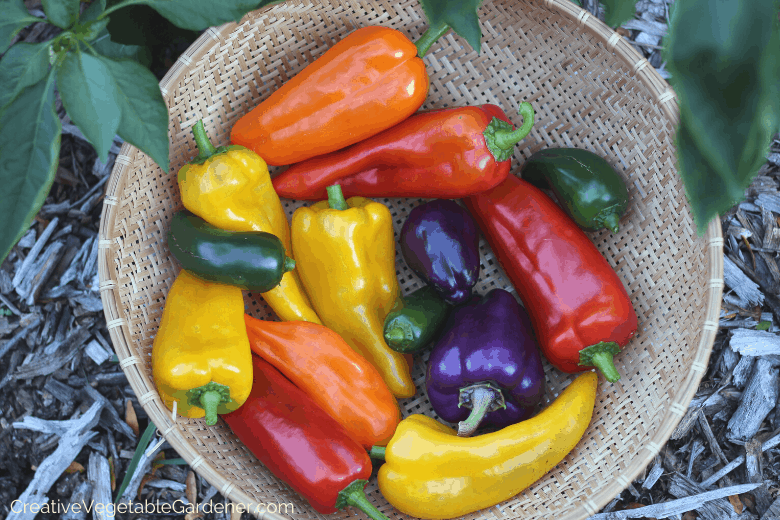
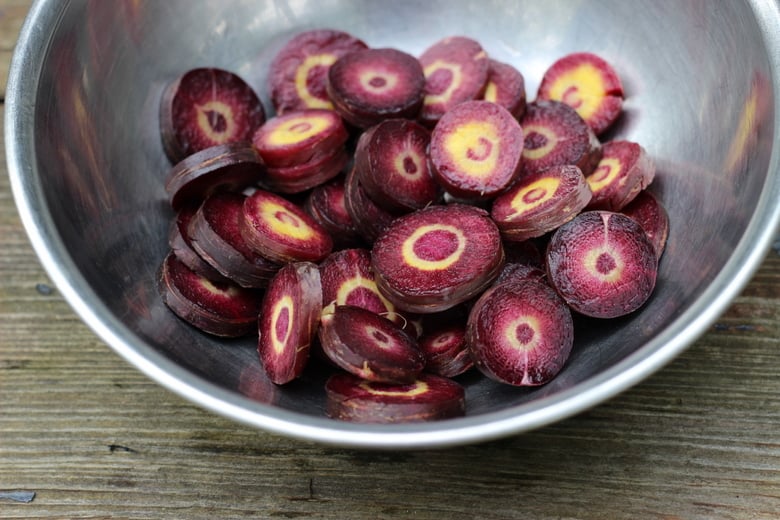
Red tomatoes, green beans, and orange carrots are great, but there’s so much more out there! This season, take a chance and grow some unique and interesting varieties in your garden.
Growing beautiful and colorful food dramatically increases the fun you’ll have in your garden.
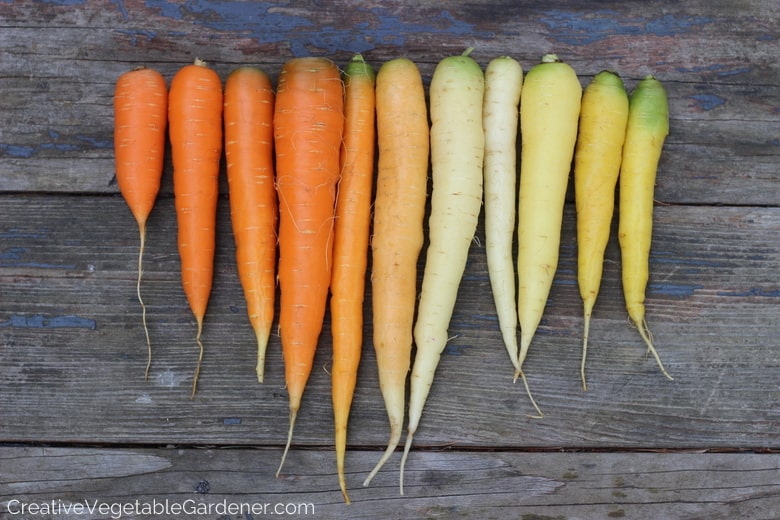
Pulling an amazing rainbow of carrots out of the ground in summer, looking out your window and seeing jewel-toned flowers bopping their heads in the wind, and adding vegetables that aren’t only tasty, but also gorgeous, to your evening meals are all joys that should be a part of every gardener’s lifestyle.
If you’re ready to create a garden that feeds your body and your soul, order some of these unusual vegetables to grow in your garden this year.
If you had to guess, what’s the most common mistake beginning gardeners make?
If you said, “starting with a garden that’s way too big”, you’re right!
Over the years I’ve met thousands of gardeners who get excited about the idea of growing their own food and then dig up a huge section of their yard.
Not the best idea!
It’s much easier to keep up with a small garden during the busy summer season. You’re more likely to be successful, which means you’re going to have a lot more fun.
And greater success will make you excited about continuing to garden the following season, and hopefully for many more seasons after that!
So, if you’re new to gardening, I encourage you to keep it simple and start small this season.
And if you’ve already hopped on the tiny garden bandwagon, here are my top tips on how to start a small vegetable garden and make the most of it so that it’s bursting with produce this year.
When I arrived in San Francisco after college for my first experience living truly on my own I had no idea how to cook anything besides pasta. In fact, I have no memory of what I ate during my four years of college. Could I really have eaten pasta every night of the week?
So imagine my surprise when my new roommate, Kathryn, made hummus from scratch and my other roommate, Jenny, used the Moosewood Cookbook to create an Indonesian dish called Gado Gado. What??!! How did these people know how to do this? Cooking was a complete and utter mystery to me.
Over the next several years, I slowly experimented with recipes scribbled down by friends. I shyly shopped at the farmers market, trying to identify all of the strange vegetables I’d never seen before. I even bought my first cookbook, the original Moosewood with the brown cover, because one of my friends would often make delicious dinners from it. I was gradually unraveling the mystery that was cooking.
That learning curve was immediately put into fast forward when I moved from San Francisco to a farm in rural Missouri for a gardening internship. Upon arrival, I discovered stress-inducing facts such as —
#1: everyone on the farm ate together in a cooperative kitchen
#2: only vegan dishes were acceptable
#3: there was a cooking rotation which I would be quickly included in, even though I had no idea how to cook
#4: to top it all off, everything had to be made from scratch and in the summer we cooked for up to 40 people on an outdoor wood-fired stove
Yikes!
Luckily, if you were a new cook you got paired with a more experienced person who was the head cook for your shift. Because of this rotation, I cooked with someone new every week which offered a crash course in many different styles, dishes, and kitchen techniques. I took a lot of direction that summer, learning how to make biscuits, buns and pizza dough from scratch, concoct simple salad dressings, and I figured out how to identify vegetables I had never seen, let alone eaten before.
By that first winter, I was initiated into the ranks of head cooks. That meant I would cook by myself in the slow winter months and be paired with new cooks once the busy summer season began the following year.
During my second year as a cook at the farm, I started to scour the piles of cookbooks for new recipes and moved into more complicated terrain like making soymilk and tofu from soybeans, creating vegan desserts, and teaching other interns the ropes of cooking for a crowd.
This post contains affiliate links.
I always tell people that living at that farm for a year and a half was like attending a very intense school where you learned things that would affect your life for many years into the future. Learning to cook was definitely one of those things. I can look at the way I cook today and the very important role food plays in my life and see the thin thread that connects all the way back to my days in Missouri.
I fell in love with food while living there. Not only was I learning how to cook for myself and others, but it’s also where my love of gardening took root and started to grow into the passion it is today.
Eighteen years later, I can confidently write that I’m a great cook. Cooking and food are now woven into the fabric of my life in such a way that it seems they have always been here. It’s so easy to take it all for granted, until I close my eyes and imagine myself back in front of the woodstove in the outdoor kitchen, nervously trying to figure out the best way to chop kohlrabi. I’ve come so far, and for that, I’m grateful.
Now, let’s rewind back to when I arrived in San Francisco, a huge foodie town. I owned no cookbooks and had likely never opened a cookbook in my life.
Now, I own a very small selection of curated cookbooks by my favorite authors and food bloggers. Many of them are stained with food, most of them I page through every few weeks for dinner ideas, and all of them feature some of my favorite recipes in the whole world.
Here are my favorite vegetable cookbooks that I think every gardener should have on her bookshelf.
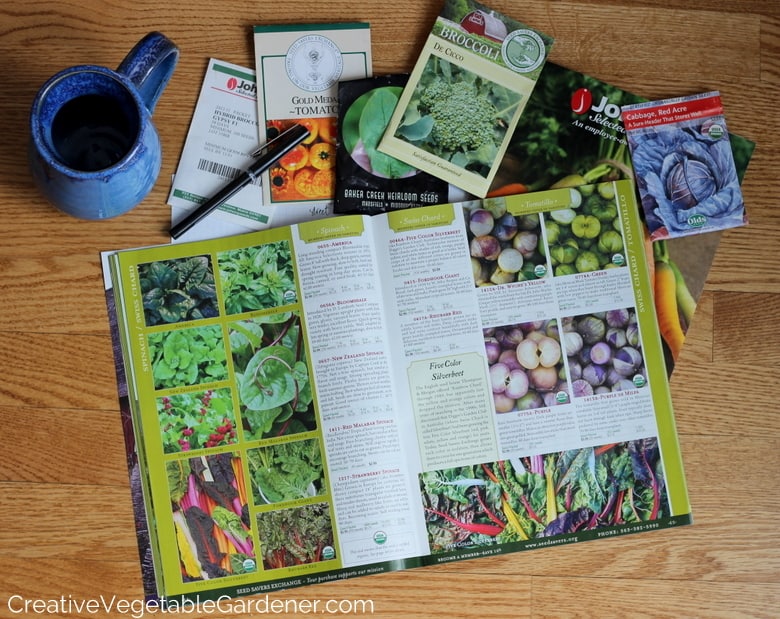
If you don’t currently receive free garden catalogs at home, you’re really missing out. It’s so fun to peek inside your mailbox on a dark and dreary winter day and find a colorful seed catalog poking out.
One of my favorite weekend activities in winter is to curl up next to my wood stove with a stack of catalogs and organic gardening books and let my imagination wander.
Ordering seed catalogs is also a first important step in planning your garden. The most successful gardeners I know order their seeds ahead of time and are ready to go when the spring planting season hits.
I don’t recommend waiting until the first nice day in spring and then running out to your local garden store to stock up on seeds. This will likely lead to buying things you don’t need and wasting a lot of money.
Ordering through catalogs offers you time to really think about and plan out what you’re going to grow in your garden this season. And there’s no better way to spend a dreary winter day!
When I think about Thanksgiving the following words and images pop into my mind: abundance, food (piles and piles of food!), family, fires, maybe a little snow, deeply saturated colors like rusty reds, burnt oranges and golden yellows, and my garden.
I love to have a robust fall and early winter garden – it’s actually my favorite gardening season. And this time of year when the holidays are in sight, I like to dream about what dishes I’m going to whip up in my kitchen with produce fresh from my garden.
Last year we hosted family from both sides at our house for Christmas, so I had lots of fun planning several days worth of brunch and dinner menus. I even harvested a huge spinach salad straight from my front yard garden on Christmas morning!
Abby in the Kids’ Garden at the Green Bay (WI) Botanical Garden
One of the most joyful parts of being a garden educator is hearing about the transformations that happen when I’ve helped someone dive wholeheartedly into gardening.
I remember the first time I chatted with Abby in person. She met me in the parking lot of my last job to buy some garden supplies. She excitedly shared with me that she recently convinced her husband to dramatically expand their vegetable garden after taking one of my classes.
Abby now teaches other gardeners in her area and her garden will be featured as a stop on a tour for a regional gardening conference next year. I think that means her transformation is complete!
I’ve been so inspired and touched by her story that I asked her to share a little bit of her journey with you. Here it is in her own words…
Abby Tells All
My success with vegetable gardening is a fairly recent development.
I started with no knowledge or experience growing anything. I had a five acre mostly wooded blank slate. I tried starting my garden from seed for a few years. As soon as the new plants emerged, their little heads bent over and they fell over dead. If one survived any length of time, it would resemble an NBA player – tall and long legged.
How do I know when it’s time to harvest broccoli, cabbage, onions?
Based on the number of questions I get about timing, it seems to be one of the most common struggles in vegetable gardening
Bad timing is the culprit of a lot of missed opportunities in our gardens. If we plant onions too late then they won’t turn into bulbs. If we don’t harvest broccoli at the right time it will flower. If it rains before we get to picking our ripe tomatoes they might split. The list goes on and on.
And the challenge of a seasonal pursuit like gardening is that when we miss the window we often don’t have another chance until the next season – a whole year later. To get the most from your garden it’s important to really understand, and then follow, the right timing for each vegetable.
A few weeks ago I shared what didn’t go so well in my garden this season. I’ve learned over the years that there’s a certain amount of mystery to gardening. Sometimes I do all the “right” things and it goes terribly wrong, sometimes what I thought would be a mistake turns out great, and sometimes I have no idea what happened! For me, this is all a part of the adventure and fun of gardening. You never know what you’re going to get from season to season!
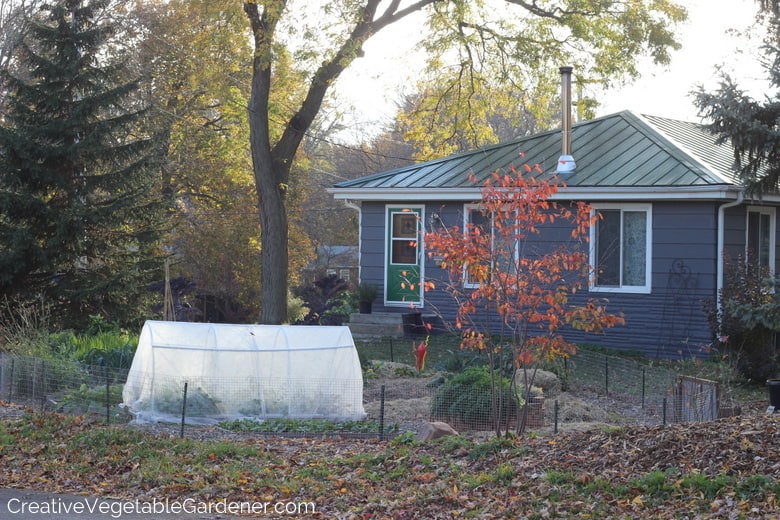
Now that the first frost has come and gone here in Madison I thought it would be a good time to celebrate the successes – whether I meant to do them or not!
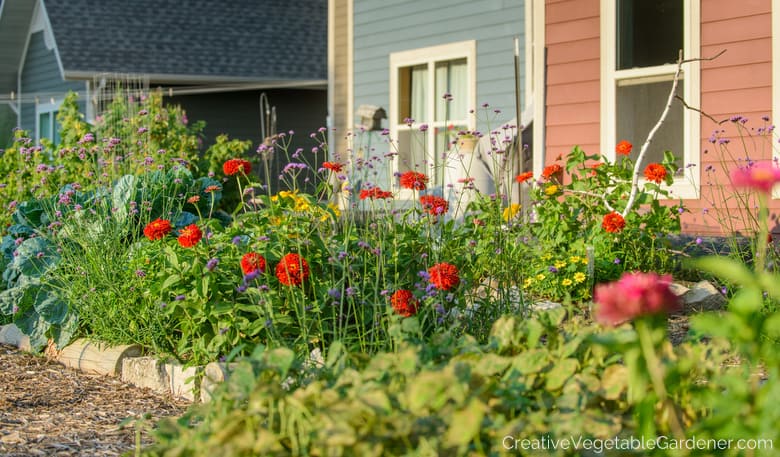
First, let’s start with the two things that are most important to me: a garden that produces a lot of food and that looks really beautiful. As the photo at the top of this post declares, I grew a lot of beautiful and tasty food. I definitely feel like I got more out of my garden than I put into it, which is always my goal!