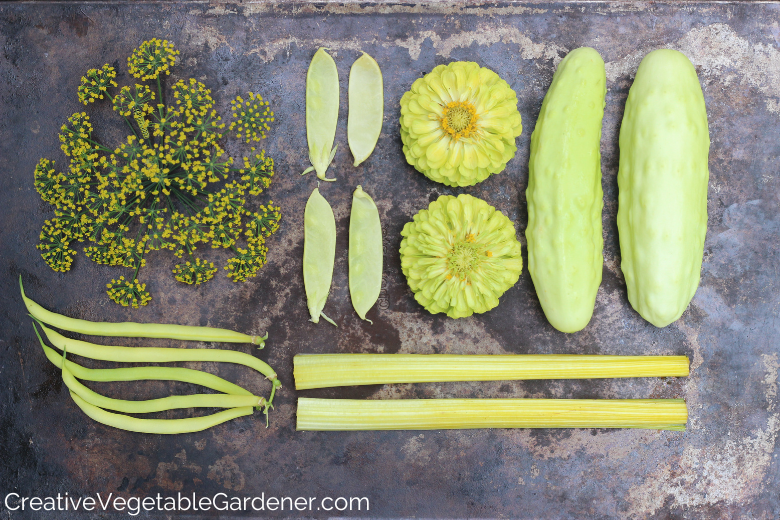
Planning your garden can mirror the act of painting a canvas. When you pick varieties of vegetables and flowers with distinct colors, shapes, and patterns it allows you to add bold splashes of color.
Vegetables often hide in the green foliage of the garden, making the garden seem monochromatic. But, with a little extra planning you can substitute a few of your go-to veggies with yellow varieties to bring an extra splash of sunshine to your garden.
This year, think of your beds as a palette and try to add more brush strokes of yellow to your canvas. This list includes my favorite yellow vegetables and flowers that spark joy and enliven the beds I “paint” upon.

A Fun List of Yellow Vegetables to Grow in Your Garden This Season
#1: Beans
Beans are a vegetable that keeps me on my toes. If you’ve grown them in your garden, you know that they tend to camouflage themselves among the green leaves, so they’re easy to miss when harvesting.
Yellow beans (and purple, too!) provide the contrast needed to make finding that perfectly ripe bean much easier than their green cousins.
Two varieties of beans that I like to grow are Trilogy Mix and Rocdor. Trilogy is a mix of yellow, purple and green beans. Each variety matures on a slightly different timeline, so you get a more staggered harvest. If you want to grow just yellow, Rocdor is an early bean, 53 days to harvest, that has a rich and buttery taste.

#2: Beets
Beets are an important part of my garden. They’re a super star in the storage department and provide a bounty of essential vitamins and minerals to my diet. And I think they taste incredible when roasted!
Touchstone Gold and Boldor are two of my favorite varieties. Though they might not stand out until you pull them out of the ground, they will definitely liven any recipe without dyeing the other ingredients a purple reddish hue like they’re red counterparts.
Read more about how to store beets for winter eating.

#3: Carrots
Yellow carrots aren’t always my fresh eating carrot of choice because they tend to be less sweet and more earthy than orange carrots. But, when they’re served shredded in salads and or roasted with savory herbs they create beautiful and delicious meals.
Yellowbunch and Yellowstone are two yellow vegetables from Johnny’s Selected Seeds that have performed well in my garden over the years.
I share lots of helpful tips on how to grow carrots in this article.

#4: Chard
Chard is one of those plants I’m tempted to grow more as an ornamental than as an ingredient in a dish because the plant itself is so striking. It’s not uncommon to see flower pots in my city’s downtown planted with yellow and red chard alongside annual flowers and ornamental cabbage and kale.
But, don’t worry, I also eat the chard I grow, once I’m done admiring it’s beauty. Heart of Gold is a tasty and colorful boost to your garden beds and will help you eat the rainbow.
All about easily freezing swiss chard with this no-cook method!

#5: Cucumbers
A common complaint about cucumbers is that they have a bitter taste. I would also put them in the same category as beans because they sneakily hide themselves among the green leaves of the plant to avoid harvest. Silver Slicer has a milder flavor along with a light colored flesh that makes them easy to spot when it’s harvest time.
I turn a portion of them into quick pickles to add a bright flavor to salads and sandwiches.
#6: Onions
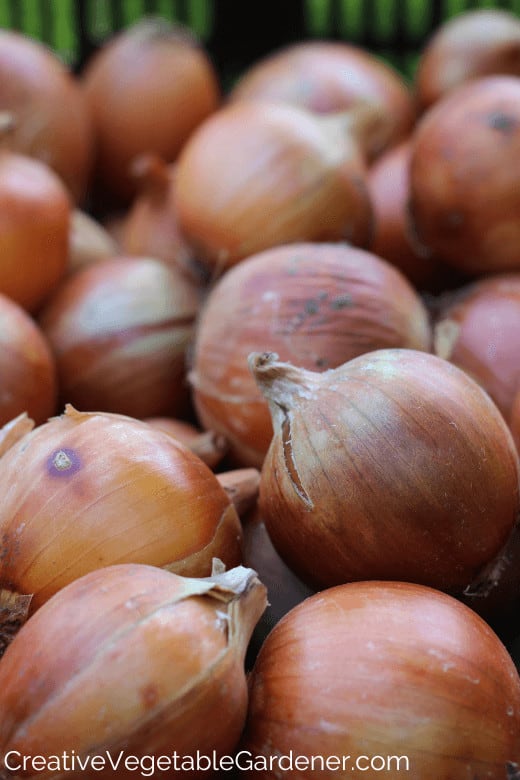
I grow up to 500 onions in my garden every year, with goal of pulling storage onions from the basement all winter and spring, hopefully up until the date of my next onion harvest in July. I like to grow a combination of onions in my garden, usually a mix of sweet, fresh eating onions and storage onions. When it comes to yellow storage onions, I have had consistent results with Patterson.
Everything I know about growing onions is in one of the most popular articles on my website.

#7: Peas
Growing peas in the Midwest feels like a race against time. As summer approaches and temperatures spike, it likely means an end to more fresh peas because the plants don’t like hot weather.
I love growing these yellow beauties from Seed Savers, Golden Sweet. They are like little sparkling jewels hanging from the trellis. And like the yellow beans and cucumbers, they have the ease of harvest because you can see them so much better than green peas. These are an excellent addition to any fresh salad or stir fry, or delicious eaten fresh off the vine.
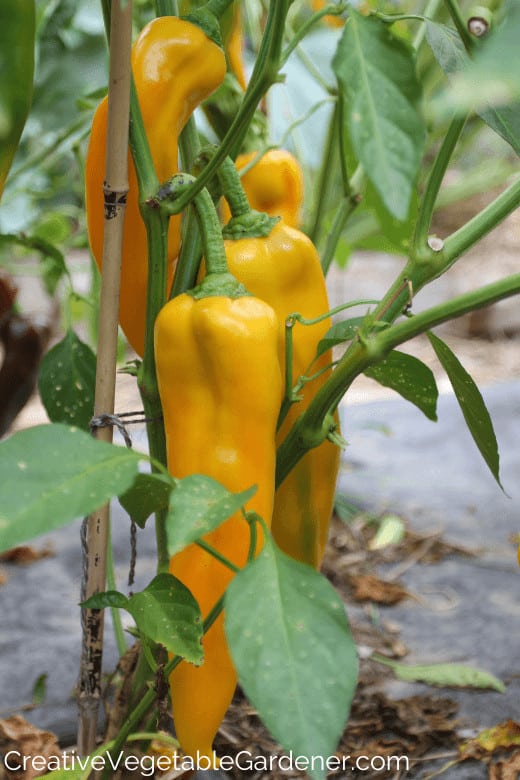
#8: Sweet Peppers
I have written extensively about my love of growing peppers. If you’ve been around here for awhile, you’ve probably heard me gush about my favorite red pepper – the big, prolific, and delicious Carmen.
Lucky for me, the alchemist plant breeders at Johnny’s Selected Seeds decided the world needed a yellow version of my favorite pepper. Escamillo has a lot of the same characteristics as Carmen, although I do find it to be slightly less productive.
Lively Italian Yellow is another frying pepper that I have grown with success in Wisconsin. The flesh has a delicious thick wall and it’s great for both fresh eating and cooking.
Read more in my essential guide to growing sweet peppers successfully.
#9: Potatoes
It would sometimes seem that there are as many varieties of potatoes as stars in the sky. Picking Yukon Gold seems like a bit of a cop out, because they can found hanging out in the vegetable aisle of pretty much every grocery store.
Though when it comes to making a delicious mashed potato to top your shepherd’s pie, or boiling up some buttery spuds for a potato salad, you’ll appreciate finding these golden nuggets buried in your garden.
Lots of gardeners ask me about best practices for watering potatoes throughout the season.

#9: Summer Squash
I typically grow two summer squash plants in my garden, one green, one yellow. This usually has me turning into the typical neighbor/friend offering anyone and everyone a bit of my harvest during peak season.
Lemon Sun patty pan adds a unique shape and a bright yellow color to your summer garden. Like most squash, harvest them early. You can use a teacup as your reference for the ideal size.
Golden Glory has more of your classic long, zucchini shape. The color of the fruit glows when they start sizing up on the plants.
Find out more about growing zucchini and how to pick the best varieties.
#10: Tomatoes
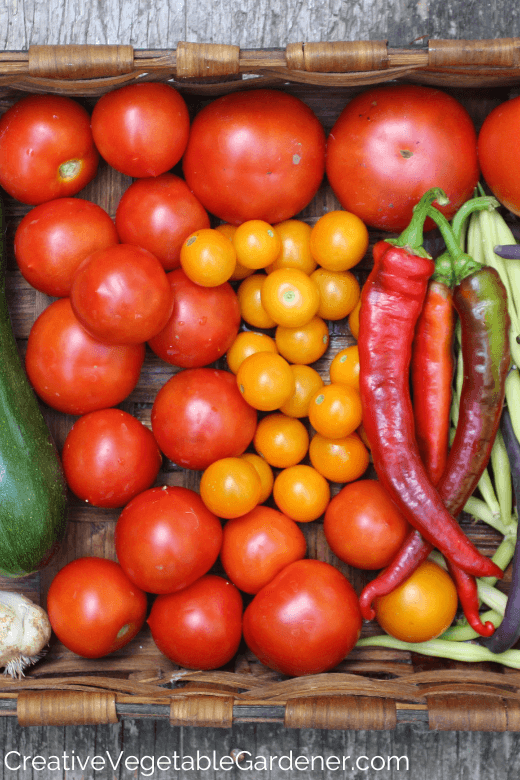
My all-time favorite cherry tomato is Sun Gold, but that’s technically an orange tomato, so it doesn’t belong in this article about yellow vegetables. Most seasons I pick another cherry tomato to go head to head with Sun Gold to see if anything can unseat it as the cherry tomato champion.
One year it was Esterina, which is more yellow and a little bigger in size than your average cherry tomato.
My young neighbor who loves eating cherry tomatoes by the handful declared that she liked the taste of this little yellow tomato better than Sun Gold. I wasn’t as convinced, so you’ll need to be the judge in your own garden.
So many choices! How to choose the best tomato varieties to grow.
#11: Watermelon
Yellow watermelon can be an exciting surprise to your typical watermelon eater. Until you cut into that green flesh you have no idea that someone replaced your bright red flesh with a sunny yellow center dotted with black seeds.
The flavor of Baby Doll, a smaller shape melon, is delicious when ripe and the smaller size makes for easier transporting when you need a desert for that intimate picnic with friends.

Yellow Flowers to Mix into Your Vegetable Garden
Even though this is an article about yellow vegetables, I love flowers and always tuck them into the ends of my veggie beds. And like any spring starved cold climate dwelling resident, I savor the yellows of spring.
Daffodils are one of the first reminders that everything is going to be ok. Spring is here, the trees will unfurl new leaves, and green will replace the grey of winter. A few years ago, I decided to plant spring bulbs in the corners of some of my vegetable garden beds. Now, I have some early spring color in that part of my yard and when the foliage dies back, I plant an annual flower in the same spot for continued blooms into the summer and fall.
Prairie Sun Rudbeckia is one of my tried and true annual flowers for the vegetable garden. Its bright sunflower-like head is attached to a stout stem and I often mix it with zinnias for a striking flower bouquet.
Sunday Gold Celosia is perfect for bouquets and its prolific enough to keep your flower vases full while still looking great in your garden beds outside.
Find out all about my favorite flowers for raised beds.
Yellow vegetables are the perfect compliment to all of the green hues in the vegetable garden. One of the greatest gifts of growing your own food is that you can choose the most unique and colorful varieties of each vegetable. This season, don’t forget to plant a rainbow of vibrant colors, including sparkles of yellow, punches of purple, bursts of blue, splashes of orange, and layers of red to turn your garden into a masterpiece!