We gardeners love our tomatoes! I know we all agree that there’s nothing quite like plucking a warm, sun-ripened tomato straight from the vine. But here’s the thing — if you’re still buying tomato plants from the garden center every spring, you’re missing out on one of the most rewarding parts of growing tomatoes.
Starting tomatoes from seed at home opens up a whole new world of possibilities. Want to grow Sun Gold cherry tomatoes (my favorite — they’re like living candy machines!)? Moonglow for the most beautiful golden slicers you’ve ever seen? Amish Paste for all your canning needs? These varieties can be hard to find as transplants, but they’re easy to start from seed.
Plus, once you get the hang of starting tomato seeds indoors, you can grow as many plants as you want for a fraction of the cost. I’ve been starting my own tomatoes for over 20 years, and I promise it’s easier than you think.
Let’s dive in!

When to Start Tomato Seeds Indoors
Timing is everything when it comes to starting tomatoes from seed. You want to give your seedlings enough time to grow strong and healthy before transplant day, but not so much time that they get overgrown sitting inside your house.
Tomato seedling grow quickly, especially if they’re in a warm area of your house and/or you’re using a seedling heat mat. I keep notes on when I start seeds and I have several reminders on my printed seed starting schedule not to start them too early.
The general rule: Start tomato seeds indoors 6-8 weeks before your last frost date.
For example, in Zone 5 Wisconsin, my last frost date is around mid-May. So I start my tomato seeds in mid to late March.
Don’t know your last frost date? Go to plantmaps.com and type in your zip code. I find this website to be pretty accurate.

What You Need For Starting Tomatoes from Seed
The good news is that you don’t need a lot of fancy equipment to grow tomatoes from seed. Here’s my tried-and-true list:
Seed Starting Mix
This is crucial. Don’t use regular garden soil or potting soil — they’re too heavy and can carry diseases that kill seedlings. You want a light, sterile seed starting mix. I’ve tried dozens over the years, and my recommendation is to look for a mix that’s specifically labeled for seed starting. I walk you through how to choose the right mix in this article.
Containers
You have lots of options here. I’ve used various types of containers to start my tomato seeds over the years: 2.5” pots, 4 packs, and paper pots. You can also use yogurt cups, egg cartons, or pretty much any small container as long as it has drainage holes. I’ve found that 6 packs are too small for tomatoes.
If you’re reusing containers from last year, wash them out with a little bleach and water to kill any bacteria.
Grow Lights
I’m going to be honest with you — you can’t successfully start tomato seeds in front of a window. Seedlings need overhead light. Without it, they’ll stretch towards the sun coming through the window and end up tall and leggy.
You don’t need expensive grow lights. I’ve been using a simple DIY setup with shop lights hung on metal wire shelving for over 20 years. Check out my guide on building your own grow light setup if you want to see exactly what I use.
A Heat Mat (Optional but Helpful)
Tomatoes are heat-loving plants, and they germinate best with some extra warmth. I use a seedling heat mat under my trays, especially for tomatoes, peppers, and eggplant. It’s not required but it will help your seeds germinate faster and more reliably.
Tomato Seeds
This is the fun part! Choose varieties you’re excited about. I grow 12-15 tomato plants every year in my garden: 2-3 cherry tomatoes (always Sun Gold!), 5-7 paste tomatoes (Amish Paste is my go-to), and the rest are slicers like Moonglow and Green Zebra.

Step-by-Step: Starting Tomatoes From Seed
Step 1: Assemble and Fill Your Containers
Moisten your seed starting mix before filling your containers. I like to dump the mix in a bucket, add water, and stir it up until it’s nice and wet.
Then fill your cells or containers, pressing down lightly but not packing it in.
Because there is lots of water involved in the seed starting process, you need to make sure you’re putting your cells or pots in something that doesn’t have holes to catch excess water.
I always use 1020 trays without holes.
Step 2: Plant Your Seeds
Make a small indent in the soil about 1/4 inch deep. Drop in 1-2 tomato seeds per cell then cover with a light sprinkling of seed starting mix.
How many seeds per cell or pot should you plant? It depends on how old your seeds are. If they’re brand new, you can probably get away with one seed per cell and it’s likely they’ll all germinate. But, you could always put two seeds in a few of them just in case.
If your seeds are several years old it’s possible they may not germinate as well, so you can put an extra seed in as many cells as you’d like.

Step 3: Label Your Varieties
As you finish seeding each variety make sure you label it with the name. If you’re planting several different varieties it’s best to keep them in separate packs, rows, or pots.
There are plenty of commercial plant tags you can buy – bamboo, plastic, or metal. Or you can make your own. I save old yogurt containers throughout the year and cut them into strips for plant labels.
Step 4: Keep Records
When you’re starting tomato seeds indoors, don’t forget to keep records! Keeping track of the varieties you grow allows you to evaluate them later in the season when they’re in the garden.
This is how you’ll be able to select the best varieties for your climate and garden over time.
To make it easy, you can print out a copy of my Seed Starting Record Template to use for yourself. Write down the variety, amount you planted, and the date started.
Step 5 Water Gently
My favorite way to water my seedlings is with a bike water bottle — the stream of water is easier to control and than a watering can, which means fewer spills on my living room floor!.

Step 6: Create a Mini Greenhouse or Germination Chamber
Seeds need consistent moisture for germination. I simply slide the 1020 tray without the holes, which is holding all of the cells and pots, into a thick, clear plastic bag to keep moisture in.. That’s my easy germination chamber. You can also cover your tray with a humidity dome or plastic wrap. Place the whole setup on your heat mat if you’re using one.
Step 7: Wait for Germination Tomato seeds typically germinate in 5-10 days when kept warm (75-80°F is ideal). Check daily and remove the cover as soon as you see green sprouts poking through the soil. Once the seeds have germinated the cover is going to be too hot for the baby plants.
Step 8: Get Them Under Lights The second those tomato seedlings emerge, they need light — and lots of it. Position your grow lights 2-3 inches above the tops of the seedlings. I keep my lights on for 12-14 hours per day using a timer. As the plants grow taller, raise the lights to maintain that 2-3 inch distance.
Step 9: Thin Your Seedlings
Once your tomato seedlings have their first set of true leaves (the second set of leaves that appear — the first set are called cotyledons and they look different), it’s time to thin. Do not attempt to grow two plants in one cell or pot, they’ll both be miserable and stunted.
Choose the strongest, healthiest seedling in each cell and snip off the others at soil level with scissors. I know it feels brutal, but this gives the other plant room to thrive.
Alternatively, you can pop out the whole root ball and gently separate the two seedlings and replant them into different pots if you want to preserve both.
Step 10: Care for Your Growing Seedlings
Keep the soil consistently moist but not soggy. I water whenever the top of the soil feels dry to the touch. After about 3-4 weeks, you can start fertilizing with a diluted liquid fertilizer every week or two.
While you’re caring for your seedlings, you can read this article about when and how to transplant tomatoes so you’re prepared when the time comes.

Common Mistakes When Starting Tomato Seeds (and How to Avoid Them)
Mistake #1: Starting Seeds in Front of a Window
We’ve covered this, but it bears repeating — windowsill seedlings get leggy. Use overhead lights!
Mistake #2: Using Garden Soil
Garden soil is too heavy for seed starting and can carry diseases. Always use sterile seed starting mix.
Mistake #3: Overwatering
The dreaded “damping off” disease thrives in wet conditions and can wipe out your entire tray overnight. Water only when needed, and make sure your containers have good drainage.
Mistake #4: Not Hardening Off Before Planting
This is huge. You can’t just take seedlings that have been living the cushy indoor life under grow lights and plunk them straight into your garden. They need to be gradually acclimated to outdoor conditions over 7-10 days.
I have an entire guide on when to transplant tomatoes that walks you through the hardening off process.
Mistake #5: Planting Out Too Early
You’re not going to gain much by trying to push the saeaosn and plant your tomatoes early. They don’t tend to put on much growth until the weather warms up, so they’ll just sit there sulking until summer weather arrives.
They’re also not frost hardy, so wait until after your last frost date and soil temperatures are consistently above 50°F.

Your tomato seedlings are ready to transplant to the garden when:
- They’re 6-8 inches tall
- They have several sets of true leaves
- The stems are thick and sturdy (not thin and spindly)
- All danger of frost has passed and the 10 day forecast looks safe
- Daytime temperatures are consistently in the 60s-70s
In my Zone 5 garden, this usually happens around the third week in May. I know some of you in warmer zones are planting out in April, and I’m incredibly jealous!
Before transplanting, make sure you’ve hardened off your seedlings properly. This process of gradually introducing them to outdoor conditions is critical for their survival.
When you plant them out, bury the stem deep — tomatoes can grow roots all along their buried stems, which makes for stronger, healthier plants. I usually bury mine up to the first set of true leaves.
You can read more about when and how to transplant tomato seedlings in this article.

Why Growing Tomatoes from Seed is Worth It
Yes, starting tomatoes from seed takes a bit more effort than swinging by the garden center and grabbing a six-pack of transplants. But here’s why I do it every single year:
Variety! Garden centers typically stock a limited number of varieties. When you start from seed, you have access to hundreds of incredible heirloom and specialty varieties.
Cost. A packet of tomato seeds costs $3-4 and contains 25-50 seeds. A single tomato transplant at the garden center? Often $4-6.
Quality. You control everything about how your seedlings are grown. The source of the seeds, the soil they’re grown in and there are no concerns about whether they’ve been hardened off properly.
The joy of it. There’s something magical about watching a tiny seed transform into a vigorous tomato plant that will eventually produce pounds and pounds of fruit. It connects you to the entire life cycle of the plant in a way that buying transplants doesn’t.
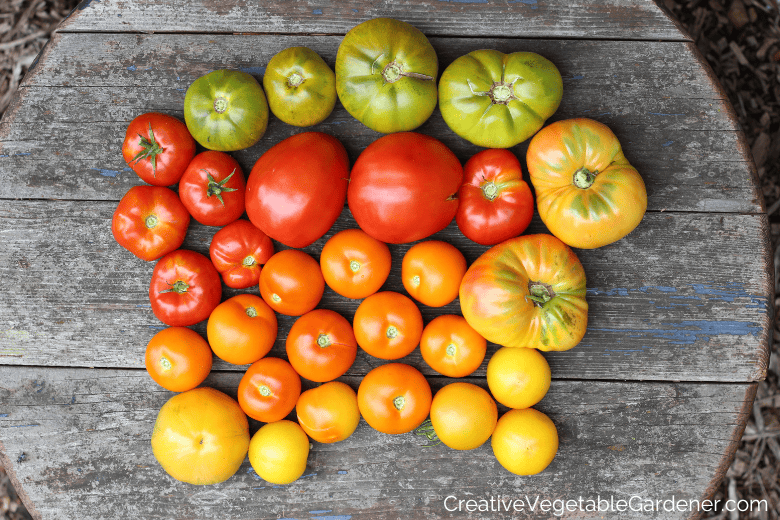
My Favorite Tomato Varieties to Grow from Seed
After 20+ years of starting tomatoes from seed, these are the varieties I come back to year after year:
Sun Gold Cherry Tomatoes – Seriously, plant these. They’re sweet, prolific, and I call them “living candy machines” for a reason.
Amish Paste – The best paste tomato for sauce and canning. Meaty, few seeds, incredible flavor.
Moonglow – A beautiful golden-orange slicer with a mild, sweet flavor.
Green Zebra – Striped green tomatoes that stay green when ripe. Tangy and delicious.
You Can Do This!
Starting tomatoes from seed might feel intimidating if you’ve never done it before, but I promise it gets easier every year. Your first year, maybe you’ll lose a few seedlings or end up with some leggy plants. That’s okay! I’ve been doing this for two decades and I still learn something new every season.
The key is to start. Get yourself some seeds, some seed starting mix, and a basic light setup. Follow the steps above. And most importantly, don’t stress about perfection. Tomatoes are surprisingly forgiving plants.
Trust me, once you bite into that first homegrown tomato from a plant you started from seed, you’ll understand why gardeners get so obsessed with this process. It’s not just about the tomatoes (although they’re amazing). It’s about the whole journey from seed to harvest.

Additional Resources for Seed Starting Success
Want to dive deeper into seed starting? Check out these guides:
- 10 Common Seed Starting Mistakes to Avoid
- How to Build DIY Grow Lights
- Best Seed Starting Mix for Home Gardeners
- How to Germinate Seeds Successfully
- When to Start Seeds Indoors in Zone 5
If you want step-by-step video tutorials on everything from building a grow light rack to creating your own personalized seed starting calendar, check out my course Super Easy Seed Starting. The videos are all filmed in my house (a.k.a. my seed starting laboratory!) and include printable templates and checklists.